
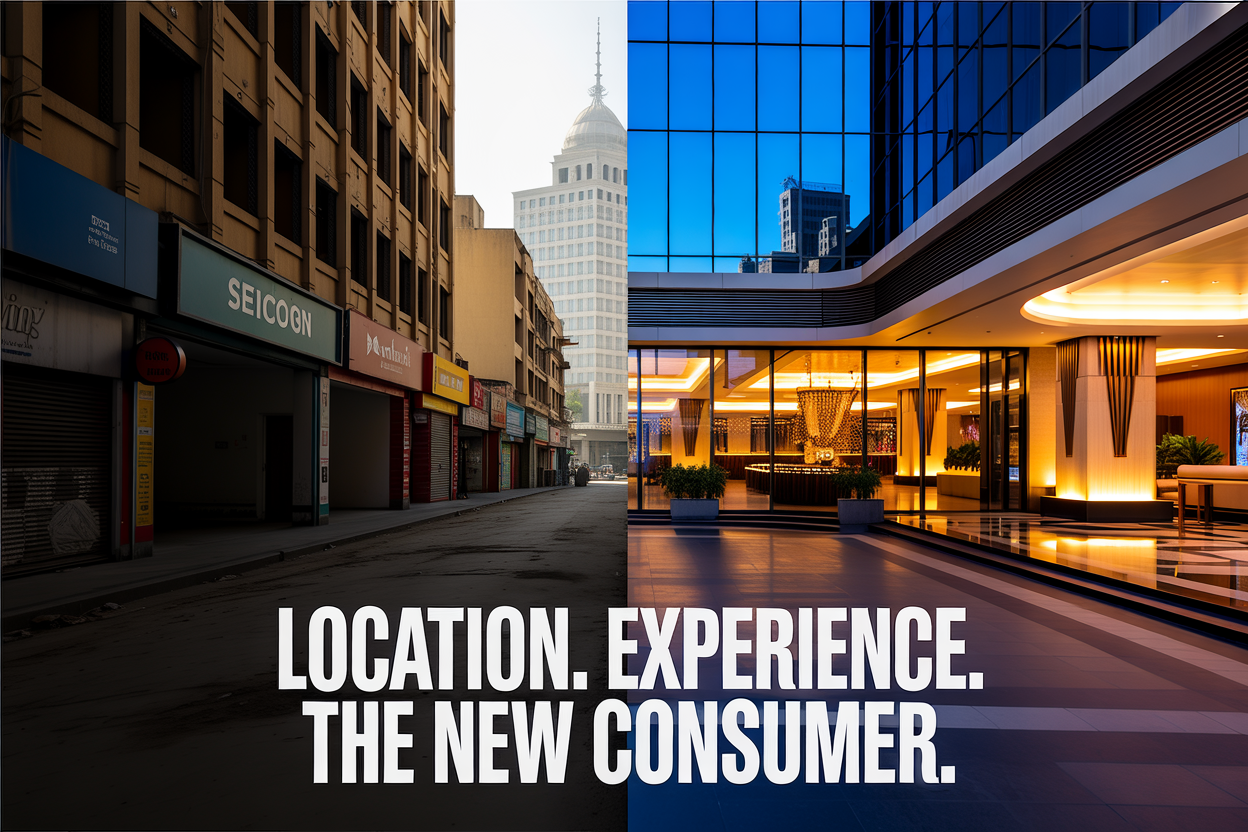
What Hotel Investors in India Can Learn From the Retail Collapse
The retail industry disruption of the last decade didn’t just hurt shop owners — it sent a clear warning to anyone betting on physical spaces. Malls emptied out. Anchor stores shut down. Footfall declined even in locations that were once considered prime. And the brands that survived weren’t the ones with the best spots — they were the ones that gave people a reason to show up.
If you’re a hotel investor in India, that warning is meant for you too.
This piece is for hotel developers, asset managers, and real estate investors who want to stay ahead of a market that’s shifting fast. The same forces reshaping retail consumer behavior — changing expectations, experience-first thinking, and a more demanding Indian consumer — are quietly doing the same to hospitality.
Here’s what we’ll get into:
- Why location alone won’t protect your investment — and what the shopping mall decline tells us about over-relying on geography
- Why experience is the new currency — and how the experience economy is redefining what guests actually pay for
- Who the new Indian consumer is — and why understanding their spending habits and expectations is now a core part of any smart hotel investment strategy
Let’s get into it.
The Retail Collapse as a Warning Signal for Hotel Investors
How Overconfidence in Physical Presence Killed Retail Giants
Retail giants once believed that prime real estate alone guaranteed success. Overconfidence in physical presence led brands to over-invest in brick-and-mortar locations while ignoring shifting retail consumer behavior. As retail footfall decline accelerated, malls that once thrived became ghost towns, exposing a fatal overreliance on location without experience.
Parallels Between Struggling Malls and Underperforming Hotels in India
Much like shopping mall decline, underperforming hotels in India often suffer from the same core assumption — that occupancy follows address. Hotels anchored in high-visibility zones but offering little differentiation mirror the retail business model failures seen across malls that prioritized footfall over engagement, ultimately collapsing under the weight of irrelevance.
Key Mistakes Retail Made That Hospitality Must Avoid Now
- Ignoring evolving consumer spending trends in favor of expansion
- Neglecting the experience economy while competing purely on price or location
- Resisting retail business transformation until disruption made recovery impossible
- Underestimating retail disruption lessons around digital behavior and personalization
Retail Mistake | Hospitality Risk |
Over-dependence on location | Assuming city-center hotels sell themselves |
Ignoring omnichannel retail shifts | Neglecting digital guest journey |
No retail business strategy evolution | Static hotel value propositions |
With this in mind, next, we’ll see how location alone no longer guarantees hotel investment success in India’s rapidly evolving hospitality landscape.
Location Is No Longer Enough on Its Own
Why Prime Real Estate Did Not Save Failing Retail Brands
Retail location strategy, once considered the golden rule of brick-and-mortar success, proved insufficient as shopping mall decline accelerated across major markets. Brands occupying premium high-street addresses and anchor mall positions still shuttered, revealing that retail footfall decline was driven by shifting retail consumer behavior rather than geography alone.
Rethinking Hotel Location Strategy Beyond Footfall and Proximity
The retail industry disruption offers hotel investors a critical lens — proximity to business districts or tourist corridors no longer guarantees occupancy or revenue. Much like omnichannel retail forced brands to rethink their physical presence, hotels must now evaluate locations based on experience delivery potential, connectivity, and alignment with evolving consumer spending trends rather than traditional footfall metrics alone.
Emerging Micro-Markets and Tier 2 Cities Redefining Value in India
Market Type | Traditional Appeal | Emerging Value Drivers |
Metro Cities | High footfall, corporate demand | Saturated, rising costs |
Tier 2 Cities | Previously overlooked | Growing middle class, lower operational costs |
Micro-Markets | Niche audience | Authentic experience, untapped demand |
Retail market analysis increasingly shows that value is migrating away from saturated metros. Similarly, hotel investment risks in legacy prime locations are rising, while Tier 2 cities present compelling retail location strategy parallels — lower entry costs, loyal local demand, and strong growth trajectories redefining what “prime” truly means.
Experience Is the New Currency for Modern Consumers
How Experiential Retail Survivors Offer a Blueprint for Hotels
Retailers that survived the broader retail collapse did so by pivoting from transactional models to experience-led environments — and hotel investors should take careful note of this blueprint.
Designing Hotel Spaces That Create Emotional and Memorable Value
Spaces must evoke emotion, not just function. Much like surviving brick-and-mortar retail destinations transformed square footage into storytelling environments, hotels must design lobbies, restaurants, and rooms that trigger genuine emotional responses — turning a stay into a memory worth sharing.
Moving Beyond Amenities to Curated Guest Journeys
Traditional Hotel Model | Experience-Driven Hotel Model |
Standard amenities list | Curated, personalised guest journey |
Transactional check-in/out | Emotionally engaging touchpoints |
Location-dependent footfall | Destination-worthy experiences |
Generic offerings | Locally rooted, culturally immersive programming |
With the experience economy reshaping consumer spending trends, modern Indian consumers no longer evaluate hotels purely on room quality or price — they evaluate the entire journey. Hotels that understand this shift, much like the experiential retail survivors, will dominate loyalty, occupancy, and long-term profitability in an increasingly competitive landscape.
Understanding the New Indian Consumer
Shifting Spending Priorities Among Millennials and Gen Z Travelers
Today’s Indian millennial and Gen Z traveler is fundamentally rewriting the rules of consumer spending, prioritizing memorable experiences over material possessions — much like how evolving consumer spending trends dismantled traditional brick and mortar retail models that failed to adapt.
The Rise of the Experience Economy in Post-Pandemic India
Post-pandemic India has witnessed a powerful surge in the experience economy, where travelers actively seek emotional connection, authenticity, and storytelling over mere accommodation. This mirrors the retail industry disruption caused by consumers abandoning transactional shopping in favor of meaningful engagement.
How Digital Discovery Is Reshaping Guest Expectations Before Arrival
Digital platforms now shape guest expectations long before check-in, paralleling how omnichannel retail transformed retail consumer behavior by blending online discovery with physical experience. Hotels ignoring this digital-first journey risk the same retail footfall decline that doomed brands clinging to outdated retail business models.
Consumer Trait | Retail Impact | Hotel Investment Implication |
Experience-first mindset | Shopping mall decline | Demand for experiential hotel offerings |
Digital-first discovery | Omnichannel necessity | Strong pre-arrival digital presence required |
Value-driven spending | Retail profitability erosion | Curated value propositions essential |
Reinventing the Hotel Value Proposition
Lessons From Retail Brands That Successfully Pivoted to Survive
Retail brands that survived the brick-and-mortar retail collapse did so by abandoning transactional thinking and embracing the experience economy. They stopped competing on product alone and started competing on meaning, community, and immersion — lessons hotel investors must internalize urgently.
Blending Lifestyle, Community and Hospitality Under One Roof
The retail business transformation playbook offers a clear directive: spaces that blend lifestyle, community, and service under one roof consistently outperform single-purpose venues. Hotels that evolve into community hubs — hosting co-working spaces, local markets, wellness zones, and cultural programming — mirror the omnichannel retail model, where multiple touchpoints deepen consumer engagement and drive repeat footfall.
Integrating Local Culture and Authenticity to Drive Loyalty
Much like retail consumer behavior shifted toward brands with authentic identity and local relevance, today’s hotel guests reward properties that reflect genuine regional character. Integrating local culture — through architecture, cuisine, art, and storytelling — transforms a hotel stay into an irreplaceable experience, building the kind of loyalty that neither aggressive pricing nor prime retail location strategy alone can manufacture.
Smart Investment Decisions in a Changing Landscape
Evaluating Hotels Like Experience Hubs Rather Than Real Estate Assets
Much like the retail industry disruption that punished investors who valued square footage over shopper engagement, hotel investors must now assess properties through an experience-first lens — measuring guest journey quality, programming depth, and community integration rather than just location premiums and room counts.
Key Performance Indicators That Reflect the New Consumer Reality
Traditional KPI | Experience-Driven KPI |
Occupancy Rate | Repeat Guest Rate |
RevPAR | Guest Satisfaction Score |
Property Valuation | Experience Revenue per Guest |
Room Revenue | Ancillary & F&B Spend |
Brick-and-mortar retail’s footfall decline teaches a critical lesson: vanity metrics mask structural vulnerability. Hotels should prioritize indicators that capture emotional loyalty and experiential value over pure transactional volume.
Future-Proofing Hotel Investments Against Evolving Market Trends
With this in mind, investors must build adaptive asset strategies that anticipate shifting consumer spending trends — embedding flexibility into design, technology, and programming so properties can evolve without costly overhauls, mirroring the omnichannel agility that saved forward-thinking retailers from collapse.
Conclusion
The retail sector’s collapse offers hotel investors in India a timely and critical lesson — that legacy advantages like prime location and brand recognition are no longer sufficient on their own. As consumer behavior continues to shift, success in hospitality will depend on how well investors understand and respond to the evolving expectations of the modern Indian traveler. Location still matters, but it must now be paired with meaningful experiences, thoughtful design, and a genuine understanding of what today’s guests truly value.
Hotel investors who take these signals seriously and rethink their value proposition will be far better positioned for long-term growth. Those who ignore the warning signs risk following the same path as outdated retail models that failed to adapt. The opportunity is real — but so is the urgency. Now is the time to invest not just in properties, but in experiences, relevance, and a deeper connection with the new Indian consumer.