
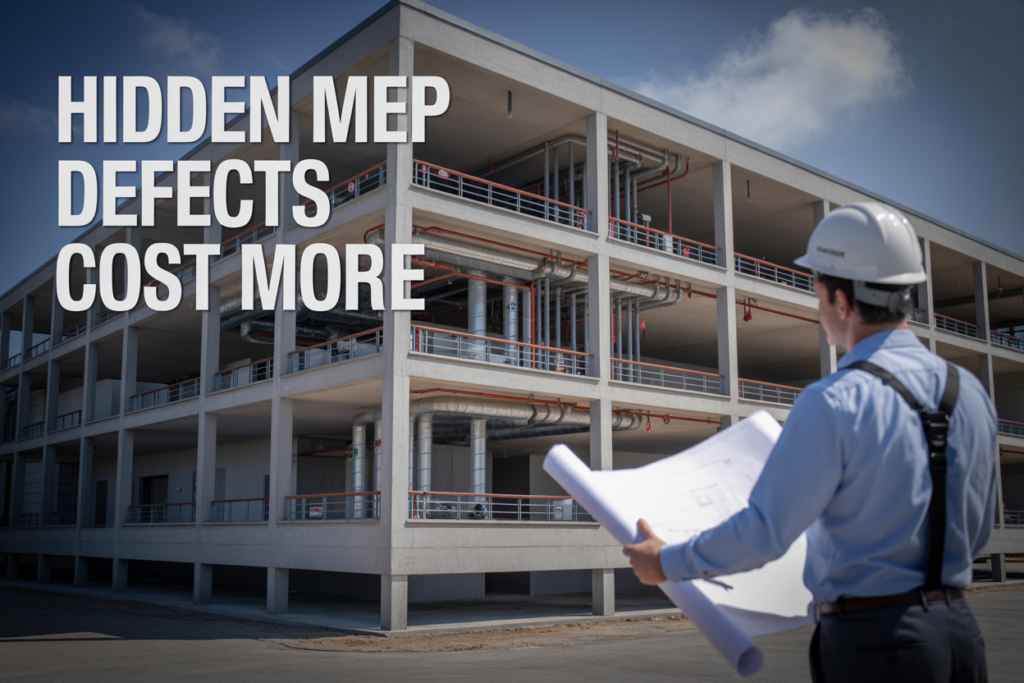
Hidden defects in hotel mechanical systems can drain your budget faster than any other construction problem. When hotel HVAC design errors or faulty plumbing installations go unnoticed during construction, they don’t just disappear—they wait to strike at the worst possible moment, often during peak occupancy or right before your grand opening.
This guide is for hotel developers, property managers, hospitality engineers, and building owners who want to protect their investments from costly MEP surprises. You’ll discover why hotel MEP defects are so expensive to fix compared to other building issues and learn practical strategies to catch problems before they become financial disasters.
We’ll walk through the most common hidden mechanical system defects that plague hotels, from HVAC distribution problems to concealed pipe leaks that can cost hundreds of thousands to repair. You’ll also learn proven early detection methods that can save you serious money and get a clear breakdown of why fixing hidden MEP issues costs 5-10 times more than addressing them during initial construction.
Understanding Hidden MEP Defects and Their Financial Impact
Definition of hidden mechanical system defects
Hidden MEP defects in hotel mechanical systems represent concealed failures within HVAC, plumbing, and electrical infrastructure that remain undetectable during routine inspections. Unlike visible defects, these issues develop behind walls, within ductwork, or inside equipment housings. Hotel MEP defects typically emerge after construction completion, requiring extensive demolition and reconstruction. These hotel mechanical failures significantly impact hotel pre-opening engineering timelines and operational readiness, making hotel technical due diligence and hotel construction quality control essential preventive measures.
Why mechanical defects cost more than electrical or plumbing issues
Hotel HVAC design errors and mechanical system failures demand complex remediation processes that exceed electrical or plumbing repair costs. Mechanical defects often require complete system shutdowns, affecting multiple hotel zones simultaneously. Hotel engineering planning must account for these risks, as mechanical repairs involve specialized equipment, longer downtime periods, and extensive coordination. Hotel MEP planning becomes critical because mechanical systems integrate with structural elements, making repairs more invasive and expensive than isolated electrical or plumbing fixes.
Statistics on repair costs for concealed versus visible defects
Hidden defects in mechanical systems are identified as the costliest to fix, with repair expenses significantly exceeding visible defect remediation. Hotel project execution risks amplify when concealed mechanical failures require comprehensive system overhauls. Hotel infrastructure planning must prioritize early detection methods, as concealed defects can cost three to five times more than visible issues. Hospitality MEP consulting data shows that hidden mechanical defects represent the highest financial impact category, emphasizing the importance of thorough hotel engineering audit processes during construction phases.
Common Types of Hidden Mechanical System Defects
HVAC Ductwork Problems Behind Walls and Ceilings
Hotel mechanical systems design often conceals critical ductwork within inaccessible areas, making detection of leaks, improper connections, and insulation failures extremely challenging. These hotel MEP defects frequently manifest as energy inefficiencies, temperature control issues, and moisture problems that can lead to costly structural damage, requiring extensive demolition and reconstruction during hotel pre-opening engineering phases or post-occupancy remediation efforts.
Faulty Insulation and Vapor Barriers
Hotel HVAC design errors frequently include inadequate or improperly installed insulation systems that create thermal bridges and condensation issues within mechanical spaces. These hotel construction mistakes compromise energy performance and can lead to mold growth, requiring comprehensive hotel engineering audit processes to identify and rectify before significant structural damage occurs in hospitality environments.
Improper Equipment Installations and Connections
Hotel project execution risks increase dramatically when mechanical equipment installations deviate from manufacturer specifications or engineering drawings. These hotel mechanical failures often involve incorrect piping connections, inadequate clearances, and improper mounting that remain hidden until system commissioning, creating substantial delays and cost overruns during hotel infrastructure planning phases.
Inadequate Ventilation System Design Flaws
Hospitality MEP consulting reveals that ventilation design deficiencies in hotel building services engineering often stem from insufficient airflow calculations and poor space planning. These hotel technical due diligence issues frequently require extensive redesign and reconstruction, making hotel construction quality control essential for preventing costly post-construction modifications.
Early Detection Methods That Save Money
Thermal Imaging and Diagnostic Testing Benefits
Thermal imaging technology reveals temperature variations in hotel mechanical systems that indicate potential failures before they become costly emergencies. Professional diagnostic testing identifies inefficient equipment performance, refrigerant leaks, and electrical hotspots in hotel HVAC design systems. These non-invasive detection methods enable hospitality MEP consulting teams to address issues during planned maintenance rather than during peak occupancy periods.
Regular Preventive Maintenance Protocols
Scheduled maintenance programs for hotel mechanical systems prevent minor issues from escalating into major failures that disrupt guest experiences. Professional maintenance protocols include filter replacements, belt inspections, and calibration checks that extend equipment lifespan. Hotels implementing comprehensive preventive maintenance reduce emergency repair costs by up to 40% while maintaining optimal guest comfort levels throughout their facilities.
Professional System Commissioning Processes
System commissioning ensures hotel MEP systems operate according to design specifications from day one, preventing costly rework during hotel pre-opening phases. Professional commissioning identifies control sequence errors, improper equipment installation, and performance deficiencies in hotel building services engineering. This thorough verification process eliminates hotel construction mistakes that could result in guest complaints, energy waste, and premature equipment replacement needs.
Smart Monitoring Technology Advantages
Advanced monitoring systems provide real-time data on hotel mechanical system performance, enabling proactive maintenance decisions before equipment failures occur. Smart sensors track energy consumption, equipment runtime, and operational parameters to optimize hotel infrastructure planning. These technologies integrate with building management systems to alert engineering teams of developing issues, reducing hotel project execution risks and ensuring consistent mechanical system reliability.
Cost Comparison Analysis
Emergency Repair Expenses Versus Planned Maintenance
Emergency hotel MEP defects repairs typically cost 3-5 times more than planned maintenance interventions. When hotel mechanical systems fail unexpectedly during peak occupancy periods, contractors charge premium rates for urgent service calls, overnight labor, and expedited parts delivery. Hotel engineering planning that incorporates preventive maintenance schedules can identify potential hotel HVAC design errors before they escalate into costly emergencies, significantly reducing overall hotel mechanical failures and associated repair expenses.
Business Disruption and Downtime Financial Losses
Hotel construction mistakes in MEP systems can force temporary closure of guest rooms, restaurants, or entire floors, directly impacting revenue streams. A single day of downtime in a luxury hotel can result in thousands of dollars in lost bookings, canceled events, and guest compensation. Hotel pre-opening engineering assessments help identify potential hotel infrastructure planning issues that could later cause operational disruptions, protecting against future revenue losses.
Energy Efficiency Impacts on Operating Costs
Hidden defects in hotel mechanical systems design often manifest as increased energy consumption, with inefficient HVAC operations driving up utility costs by 15-30% annually. Poor hotel MEP planning can result in oversized equipment, inadequate insulation, or improper system balancing that wastes energy. Hospitality MEP consulting during design phases helps optimize system efficiency, while hotel technical due diligence can identify existing inefficiencies before they compound over time.
Long-term Building Performance Degradation Costs
Unaddressed hotel MEP defects accelerate overall building deterioration, requiring more frequent equipment replacements and major system overhauls. Hotel project execution risks include improper installation techniques that reduce equipment lifespan from 15-20 years to 8-12 years. Hotel construction quality control and regular hotel engineering audits help maintain building systems at optimal performance levels, preventing premature degradation that leads to substantial capital expenditures and extended hotel building services engineering interventions.
Prevention Strategies for Building Owners
Quality Control During Construction Phases
Implementing rigorous hotel construction quality control protocols during each construction phase prevents costly MEP defects from becoming hidden problems. Regular inspections at roughing-in, pre-drywall, and final stages catch installation errors before they’re concealed, particularly in hotel HVAC design where accessibility becomes limited once walls are closed.
Working with Experienced MEP Contractors
Partnering with proven hospitality MEP consulting firms reduces project execution risks significantly. Experienced contractors understand hotel mechanical systems design complexities and implement best practices that prevent common installation mistakes. Their expertise in hotel engineering planning ensures systems meet hospitality-specific requirements while maintaining long-term reliability.
Implementing Comprehensive Inspection Schedules
Establishing systematic inspection protocols throughout hotel pre-opening engineering phases identifies potential failures before guest operations begin. These schedules should include pressure testing, commissioning verification, and performance validation of all hotel building services engineering components to ensure optimal functionality.
Investing in Proper System Documentation
Comprehensive documentation serves as the foundation for effective hotel infrastructure planning and future maintenance. Detailed as-built drawings, equipment specifications, and operational manuals enable facility teams to perform hotel technical due diligence and quickly identify issues during routine maintenance, preventing minor problems from escalating into costly hidden defects.
Conclusion
Hidden defects in mechanical systems pose one of the greatest financial threats to building owners and facility managers. The evidence is clear: these concealed issues cost significantly more to remediate than problems caught early through proper detection methods. From faulty HVAC components to compromised plumbing systems, the longer these defects remain undetected, the more extensive and expensive the damage becomes.
The most effective defense against costly surprises lies in implementing comprehensive early detection strategies and preventive maintenance programs. Building owners who invest in regular system inspections, thermal imaging, and proactive monitoring protocols consistently save thousands of dollars compared to those who rely on reactive repairs. Taking action now to identify and address hidden mechanical defects isn’t just smart building management—it’s essential financial protection for your property investment.