
Your Staff Can't Fix a Broken Business Model
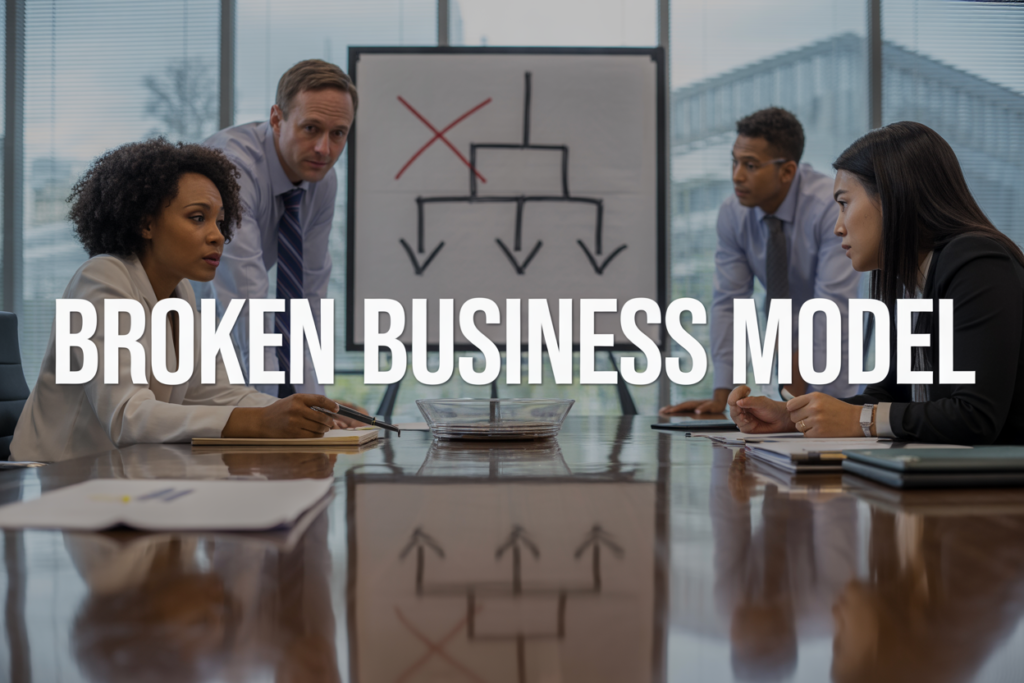
Your hardworking team keeps putting out fires, but the problems keep coming back. You’re dealing with operational inefficiency causes that run deeper than workflow issues or training gaps.
This guide is for business leaders, managers, and entrepreneurs who suspect their struggles go beyond staff performance. When good people can’t make broken systems work, you’re likely facing business model failure at the foundational level.
We’ll explore how to spot the warning signs of a broken business model that no amount of operational tweaks can fix. You’ll learn why even your best employees can’t compensate for flawed revenue structures, misaligned value propositions, or unsustainable cost models.
We’ll also cover the difference between symptoms and root causes – because fixing company foundations requires looking beyond daily operations. Finally, we’ll walk through practical steps for business model transformation that sets your team up for real success instead of constant struggle.
When staff can’t compensate for systemic business problems, it’s time to examine what’s really broken.
Recognizing the Signs of a Broken Business Model
Persistent operational struggles despite good staff performance
When talented employees consistently fail to achieve targets despite their competence and effort, this often signals a broken business model rather than staff inadequacy. Organizations experiencing this paradox frequently witness dedicated teams working harder while results continue to decline, creating operational burnout causes that stem from systemic issues beyond individual control.
Revenue decline trends that operational improvements cannot reverse
Business model failure becomes evident when revenue continues dropping despite implementing operational efficiency measures, staff training programs, and process optimizations. These symptoms vs. root cause scenarios reveal that surface-level improvements cannot address fundamental structural problems where the business model itself no longer generates sustainable value or meets market demands effectively.
Understanding the Limits of Staff-Level Solutions
Why Employee Training Cannot Solve Strategic Positioning Problems
Employee training addresses skill gaps and knowledge deficiencies, but it cannot fundamentally alter a company’s market position or value proposition. When businesses face broken business model challenges—such as targeting the wrong customer segment or offering products that lack market demand—no amount of staff development can compensate for these systemic business problems. Training programs may temporarily mask issues, but they fail to address the core strategic misalignment that drives business model failure.
The Boundaries Between Operational Efficiency and Business Model Effectiveness
Operational inefficiency causes stem from process breakdowns, resource allocation issues, or skill mismatches that staff-level solutions can genuinely address. However, business model effectiveness concerns the fundamental logic of how a company creates, delivers, and captures value. While employees can optimize existing processes and improve execution within established frameworks, they cannot redesign the underlying economic engine that determines whether the business can sustainably generate profits and growth in its chosen market.
Identifying Business Model Fundamentals That Drive Success
Revenue Stream Viability and Market Demand Alignment
A sustainable business model requires revenue streams that genuinely align with market demand rather than wishful thinking. When systemic business problems emerge, they often stem from fundamental misalignment between what customers actually want and what the company is selling. This disconnect forces staff to constantly compensate for poor product-market fit, creating operational inefficiency causes that no amount of employee effort can resolve.
Cost Structure Sustainability Versus Operational Band-aids
The difference between sustainable operations and broken business model symptoms lies in cost structure design. Companies with flawed foundations often rely on staff to patch inefficiencies through overtime, workarounds, and heroic efforts rather than addressing core structural issues. This approach creates operational burnout causes while masking the reality that staff can’t compensate for fundamentally unsustainable economics that require strategic realignment.
Strategic Approaches to Business Model Transformation
Conducting honest assessments of core business assumptions
Now that we’ve identified the fundamental limitations of staff-level solutions, it’s time to examine the foundational beliefs driving your organization. A broken business model often stems from outdated assumptions about market demand, customer behavior, or competitive positioning that leadership continues to accept as fact.
Redesigning systems that enable rather than hinder staff effectiveness
Previously, we’ve seen how operational inefficiency causes stem from misaligned systems rather than employee shortcomings. When staff struggle despite their best efforts, the root cause typically lies in processes, technology, or workflows that create friction instead of facilitating success. Strategic transformation requires dismantling these barriers.
Building Sustainable Operations Through Model Alignment
Developing processes that support rather than fight the business model
Now that we have covered the strategic approaches to transformation, building sustainable operations requires aligning every process with your core business model fundamentals. When processes fight against the model, staff burn out trying to compensate for systemic business problems through sheer effort alone.
Empowering staff through clear strategic direction and proper tools
Previously established broken business model patterns show that operational inefficiency causes stem from misaligned leadership vs. operations priorities. Providing staff with tools that actually support the business model prevents the exhausting cycle where staff can’t compensate for foundational weaknesses.
Conclusion
When your business struggles despite having talented, hardworking employees, the issue likely runs deeper than operational inefficiencies or staff performance. A broken business model cannot be fixed through better training, process improvements, or even exceptional team effort. The fundamental structure of how you create, deliver, and capture value must align with market realities and customer needs.
True transformation requires the courage to examine and potentially rebuild the core foundations of your business model. Focus on identifying the strategic elements that drive sustainable success, then align your operations accordingly. Your staff can execute brilliantly, but only when they’re working within a model designed for success. Don’t ask your team to overcome structural flaws—instead, give them a framework that amplifies their talents and efforts toward meaningful results.