
Why Every Standalone Hotel Investor Needs Someone Independent
I’ve spent 32 years in hotels, running operations and delivering projects. I’ve seen what a well-planned hotel looks like when it opens, and I’ve seen what happens when the important decisions were made by people who never had to run the place. That experience is why I work the way I do today.
I advise hotel owners and only hotel owners. I have no brand affiliation, no vendor relationships and no management contract to win. When you sit across from me, I’m not selling you a flag, a supplier or a long-term arrangement. My only interest is that your hotel gets built well, opens ready and makes money.
Everyone Around You Has Something to Sell
If you’re thinking about building a hotel, you’ll soon be surrounded by capable, experienced people, and almost all of them have a commercial interest in the outcome.
Brands want a management contract. That’s their business model, and there’s nothing sinister about it, but it does mean they can’t give you a neutral opinion on whether you need a brand at all. Ask a brand whether you need a brand and the answer is almost always yes.
Consultants are usually stronger on independence, and many are excellent at market data and financial modelling. But most are engaged after you’ve already decided to build. Their work tends to end with a report, and the distance between a report and an operating hotel is exactly where owners get hurt.
I’m not saying either of them is wrong to do what they do. I’m saying that if you have nobody on your own side of the table, you’re making some of the biggest decisions of your life with advisors who each see only a slice of the picture.
It Starts Before the Architect, the Brand and the Blueprint
I like to meet an investor at the very beginning, before anyone else has been appointed and before anything has been drawn.
At that stage the conversation is simple but important. Is the land right for a hotel? Who is the guest? Where does the market actually have room for you? What does your vision look like once it meets reality? I help investors turn ambition into a clear, commercially viable brief, so that what you want and what the market will support line up.
This is also the point where I can give you unbiased advice on standalone versus brand-affiliated. Sometimes a brand is the right answer. Sometimes it isn’t. Either way, you should hear it from someone who earns nothing from the decision.
The Financial Picture You Deserve Before You Commit a Rupee
A feasibility study is only worth something if it’s honest. Too many are built to support the investment case rather than challenge it. I try to do the opposite.
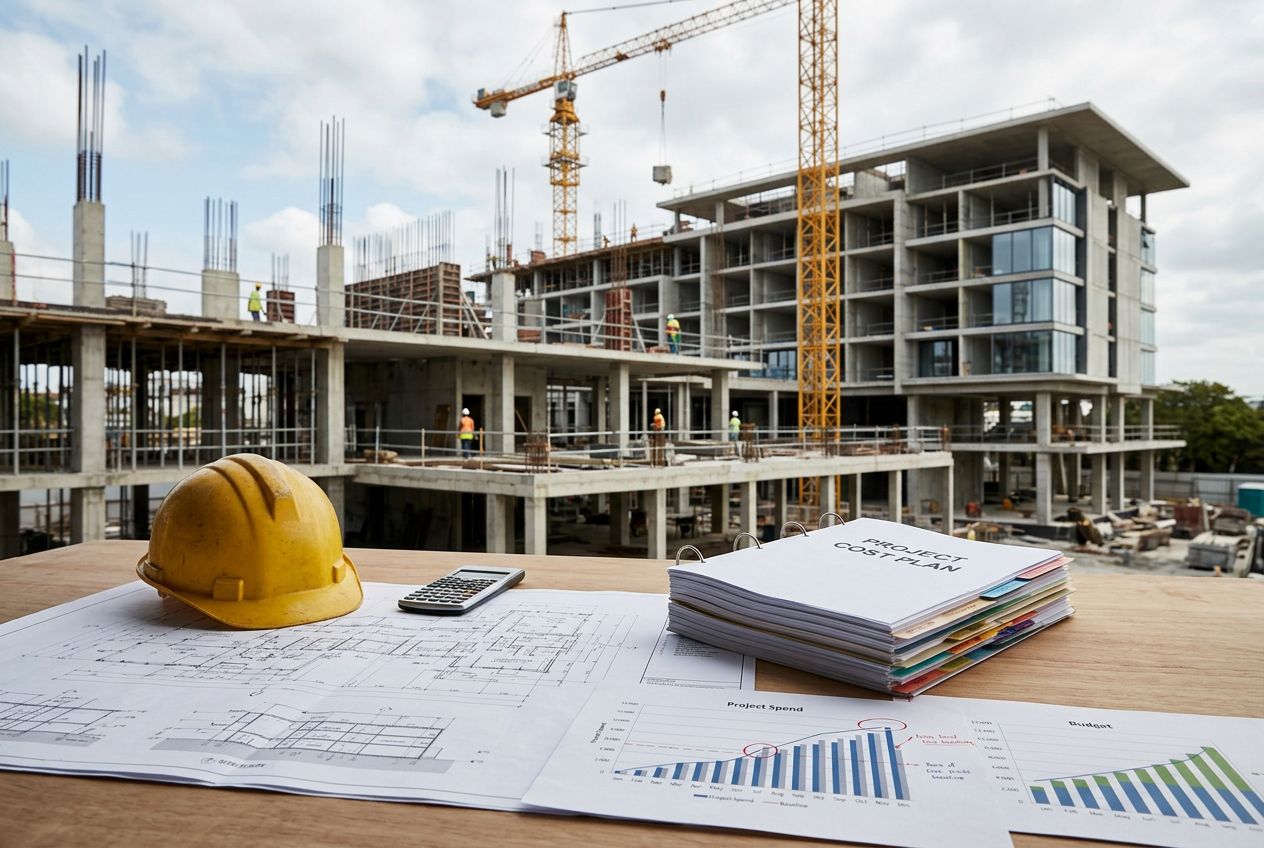
I build the complete investment picture: construction, MEP, interiors, furniture, operating supplies, pre-opening costs, working capital and contingency. I lay it out month by month against construction milestones, and I model returns and breakeven using realistic occupancy and rate data, not the optimistic version. I also validate the builder’s quantities independently, because underestimated line items are one of the quietest ways a project goes over budget.
Here’s the story I share most often, because it says everything. On one project, the estimate was ₹65 Cr. When I went through it properly, I identified that the real figure was closer to ₹90 Cr. The owner chose not to act on it. The project now stands at ₹112 Cr.
I don’t tell that story to say “I told you so”. I tell it because the number was knowable early, and knowing it early is the whole value of independent advice.
Design That Works for the People Who Will Run the Hotel
Most design reviews check whether a hotel meets a brand’s standards. That’s useful, but it isn’t the same as asking whether the hotel will run well and cost less to operate.
I review architecture, interiors and MEP through an operator’s eyes, because I’m an operator. On the architecture I look at guest flow, room mix, lobby proportions, corridor widths and floor efficiency. On the interiors I walk the guest journey from arrival to room and consider the service flow and what it means for furniture and equipment. On MEP I look at HVAC for comfort and energy efficiency, electrical for real operating load and plumbing for longevity.
What I’m really hunting for is the design decision that quietly turns into a cost you pay every day for the next twenty years, and I’d much rather find it on paper than in concrete.
One example still makes me smile. A project had the restaurant planned on the third floor and the kitchen in the basement. On drawings, it looked fine. In real life, it would have been a daily struggle. We caught it and corrected it before construction started.
I should be clear about my limits here. I’m not a licensed architect, interior designer or MEP engineer, and structural review needs a qualified engineer. What I offer is an operational overlay on top of their technical work, not a replacement for it.
Back-of-House: The Part Nobody Sees Until It Goes Wrong
If there’s one area where I feel I add the most value, it’s back-of-house.
Guests never see it, and investors often forget about it. But it decides how efficiently your hotel runs. I review kitchen placement and its adjacency to your F&B outlets. I look at laundry sizing, linen trolley circulation and linen storage. I check housekeeping pantry locations on every floor, because every extra minute of transit time becomes staff cost. I look at loading docks, waste management and service lifts, at staff areas like locker rooms, canteens and supervisor stations, and at whether every major system can be reached for maintenance without disrupting guests.
Here’s why this matters. Brands do specify back-of-house minimums, such as kitchen size ratios and laundry capacity formulas. But an owner can meet every brand standard and still end up with a back-of-house that’s inefficient and expensive. Meeting the minimum isn’t the same as being well designed.
Hospitality consultants, on the other hand, focus mainly on the financial side. Back-of-house design usually isn’t part of a standard consulting engagement at all. I believe this is the biggest gap in the market, and it’s the one I’m most glad to fill.
CAPEX Advice With No Strings Attached
Because I have no vendor relationships and earn nothing from what you buy, my CAPEX advice doesn’t come with hidden incentives.
I help you build the full capital plan and track it against milestones. I review change orders during construction and flag unnecessary escalation. On furniture, fixtures and equipment, I help balance specification, vendor choice and quality against cost, because the right answer depends on your market and your budget, not on someone’s approved supplier list.
Project management and cost consultancy firms are very strong on CAPEX mechanics, and I respect that. What they don’t always bring is hospitality context, such as how a specification choice affects pre-opening or day-to-day operations. That’s the piece I add.
One limit to be upfront about: I don’t have in-house quantity surveying expertise. My CAPEX work is advisory, not contractual, so if you need formal QS certification or tendering support, you should engage a qualified QS alongside me.
Opening Day Should Be Ready, Not Hopeful
A finished building is not a finished hotel. I’ve led more than 10 pre-openings, and the lesson is always the same: the hotels that open well are the ones that prepared for it long before the doors opened.
My pre-opening work runs across roughly 18 months. It covers a master checklist, SOPs for every department, staffing structure, recruitment timelines, training and mock operations. It includes technology setup, from your property management system and booking engine to POS and CCTV, all integrated before opening. It also includes vendor onboarding and a realistic monthly OPEX model with productivity benchmarks and energy targets.
I apply a preventive quality approach using PIKS and Q&CI across every department. The idea is to stop problems before they reach a guest, not scramble after the complaints come in. That means mock service runs that simulate peak arrival, restaurant service and checkout before the first paying guest. It means room inspection checklists signed off before every check-in, and staff trained on grooming, communication and complaint resolution.
Brands do this very well, and I’ll say so plainly. Pre-opening is their core business. But it comes with a price: management fees of around 8 to 12 percent of revenue, long-term contracts and a loss of operational independence. Consultants, on the other hand, usually stop before this stage even begins. I try to give you the readiness without the dependency.
The Real Goal: You, Running Your Own Hotel
This is the part I care about most.
Many brand contracts run 10 to 25 years, with heavy penalties for exit. The guests are loyal to the brand, not your property, so if the brand leaves, you’re left without the guest relationship or the systems that were making the hotel work. You own the building, but someone else owns the operation.
Plenty of consulting engagements create a softer version of the same thing. The business model rewards staying involved, not stepping back.
I want every engagement to end with you not needing me. By the time I hand over, you should understand your financial model, including RevPAR, OPEX, breakeven and monthly cash flow. You should know your operations: what each SOP covers, how to audit compliance and how to coach your team. You should know your market, too, including how to read your OTA dashboards, respond to reviews and adjust pricing.
Knowledge transfer is a deliverable, not an afterthought. There’s no long-term contract and no ongoing fee once we’re done.
Being Honest About Where I Stop
I think trust is built by saying what you can’t do as clearly as what you can. So here’s my honest list.
I work alone. I’m a personal advisor, not a large firm, which means there’s no 24/7 helpdesk and no standing team behind me. Once an engagement ends, deeper support means re-engaging me. For very large hotels of 300 keys or more, a dedicated pre-opening manager or team may be needed alongside my advice, because at that scale I guide rather than execute. I haven’t run departments in properties above 300 keys, so for ultra-large convention hotels of 500 keys or more, a specialist back-of-house design firm can add value too. For complex financing, JV structures or institutional capital, you should bring in a specialist finance firm, since I’m not a chartered accountant or licensed financial advisor. My Q&CI training runs deep, but if you need formally certifiable standards like ISO or brand audits, you’ll need the right certification body.
None of that changes what I’m good at. It just means I’ll tell you when someone else is the right person.
The Bottom Line
Consultants are strong on feasibility but tend to be light on operational design and on leaving the owner empowered. Brands are strong on operations but commercially conflicted on vision, CAPEX and owner independence. Neither is designed to walk with you from the first idea to the day you can run the hotel yourself.
That’s the space I work in, from vision to operational handover, as one trusted voice with no conflict of interest.
If you’re thinking about building a hotel, talk to me before you talk to anyone else. I’ll sit on your side of the table, before the architect, before the brand and before the blueprint.
Amit Gupta | Nishi Services
www.hotelprojectconsulting.com · +91 90394 72304 · guptaa1973@gmail.com