
Introduction: The Contract Nobody Reads Twice
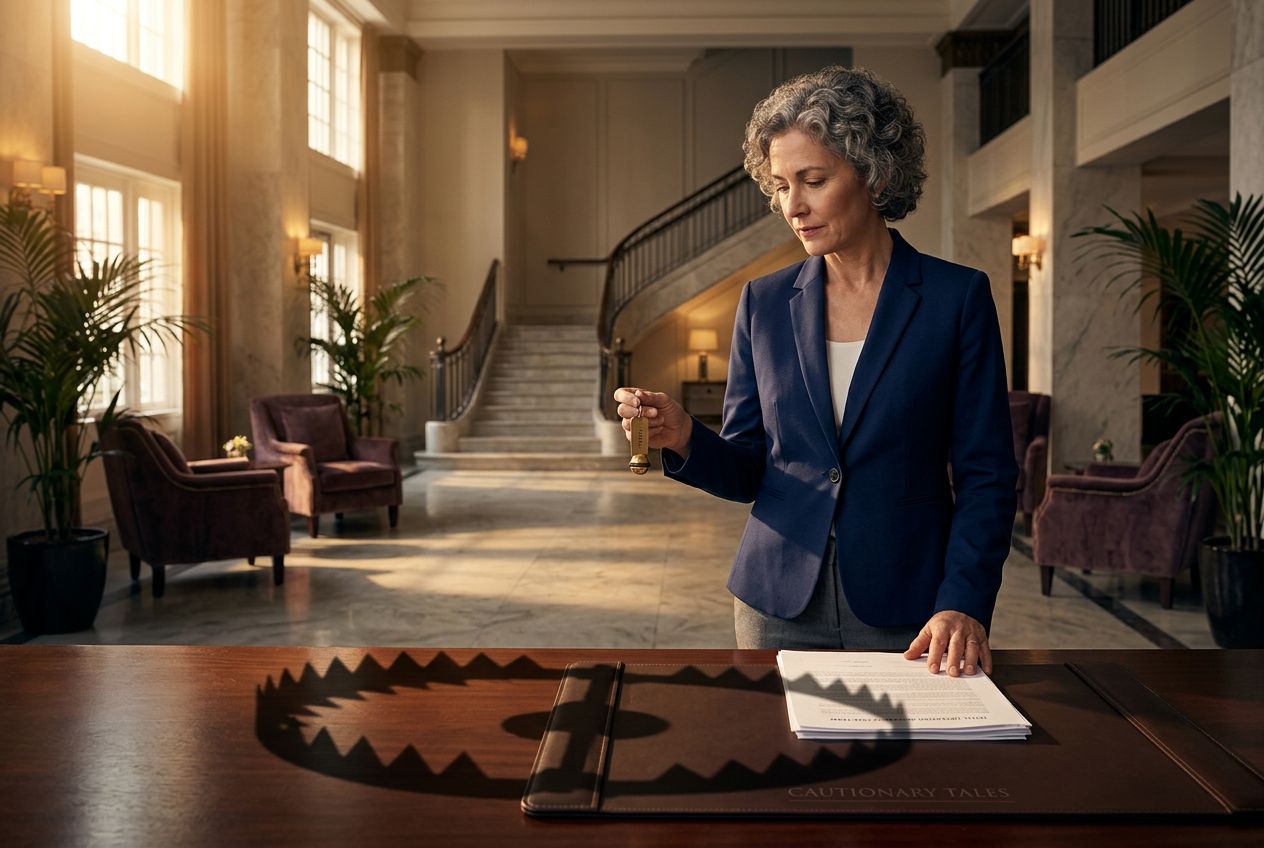
Picture a first-time hotel investor. The land is bought, the funding is in place, and the dream is finally taking shape. Then a well-known brand steps in with a confident offer: “Leave everything to us. We’ll run it for you.”
It sounds like a relief, and for many new investors it is an easy yes. What often goes unnoticed is what sits inside the agreement: a management contract that can run for 10 to 25 years, with heavy penalties if you want out.
Years later, some owners realise they own the building but not much else. The systems belong to the brand. The staff follow the brand’s standards. The guests are loyal to the brand, not to the property. Walking away means paying dearly, and starting over with almost no brand value of their own.
This isn’t about brands being bad. They bring real strengths, including proven systems and large booking networks. It’s about how the model works: the more dependent an owner is, the more secure the brand’s business becomes. Consultants can face a similar pull, since many are rewarded for continuing an engagement rather than ending it.
That is why owner empowerment matters. It means finishing your hotel project able to run your hotel independently, understanding your numbers, your operations, and your market, without needing anyone else’s permission. Owning a property and being in control of it are two very different things.
In this post, we’ll explain what owner empowerment really means, why it’s so often missing, and how you can protect it from day one
What Is Owner Empowerment?
Owner empowerment means that by the time your hotel project is complete, you are fully capable of running it independently, without needing to rely on any outside party.
That doesn’t mean you must personally do everything. You may still hire a strong general manager and a good team. It means you understand your business well enough to guide it, question it, and steer it in the direction you want. It comes down to three areas of understanding.
1. Understanding Your Finances
A hotel is a business with numbers that move every day. An empowered owner understands the key ones:
- RevPAR (Revenue Per Available Room): how much income each room in your hotel earns, whether it is occupied or not. It is one of the quickest ways to judge how healthy your hotel’s performance is.
- OPEX (Operating Expenses): the day-to-day costs of running the hotel, such as salaries, electricity, laundry, supplies, and maintenance.
- Breakeven: the point at which your income covers all your costs. Until you reach it, you are losing money.
- Monthly cash flow: the actual money moving in and out each month, which decides whether you can pay your bills comfortably.
If these numbers are just figures someone else reports to you, you are trusting rather than managing. When you understand them, you can spot problems early and make confident decisions.
2. Understanding Your Operations
A hotel runs on systems. Every task, from cleaning a room to handling a guest complaint, should follow a clear procedure known as an SOP (Standard Operating Procedure). An empowered owner knows which SOP covers what, how to check whether the team is following them (an audit), and how to coach staff when standards slip. Without this, you can’t tell whether your hotel is running well or just looking well.
3. Understanding Your Market
Today, a large share of hotel bookings come through OTAs (Online Travel Agents), such as the major booking websites and apps. An empowered owner knows how to read these dashboards, respond to guest reviews, and adjust room prices as demand changes. These skills directly affect how full your hotel is and how much you earn.
Why Many Owners Lose Control Without Realising It
This next part is uncomfortable but important. Most of the industry is not built to make you independent. The reason is not necessarily bad intent. It is simply how the business models work.
How Brand Groups Work
Large hotel brands, such as Sarovar, IHCL, Radisson, and IHG, offer real strengths. They have proven operating systems, trained staff, and large booking networks. But their commercial model depends on long-term relationships with owners.
- Long contracts. Brand management agreements often run for 10 to 25 years, with termination penalties. Leaving is expensive.
- Built-in dependency. Brands are incentivised to keep owners reliant on their systems, their staff, and their standards.
- The guest belongs to the brand. Guests are usually loyal to the brand, not to your individual property. If you eventually leave, you may find you have built very little brand value of your own.
Put simply, the owner owns the building, while the brand owns the operation and the guest relationship. For a brand, an owner who becomes fully independent is a risk to its business model, not a goal.
How Consultants Work
Hospitality consultants, including the well-known advisory firms and individual advisors, are often strong at feasibility studies, which check whether your hotel idea makes commercial sense. But owner empowerment is a different matter.
- Some individual consultants do build owner capability as part of their work.
- Many consulting firms, however, earn more when an engagement continues than when it ends.
- Teaching the owner about finances and operations is rarely a formal, scoped deliverable. It tends to happen informally, if it happens at all.
The result is that many owners finish a project with a beautiful report but still depend on the consultant, the firm, or the process to understand what is going on.
A Different Approach: Independence by Design
Nishi Services, led by Amit Gupta, takes the opposite starting point. Every engagement is structured to end with the owner being independent, rather than continuing to depend on the advisor. Here is what that looks like in practice.
Knowledge transfer is a deliverable, not an afterthought. Teaching you how your hotel works is planned, scoped, and completed as part of the project, just like any other output.
No long-term contract. There is no management agreement and no ongoing fee obligation once the handover is done. When the work ends, it ends.
Only on the owner’s side. Amit works purely for the owner. He has no brand affiliation and no vendor relationships, which means no hidden reason to steer you toward a particular product, brand, or supplier. There is no conflict of interest.
One trusted voice from start to finish. Instead of passing you between an architect, a consultant, and an operator, you work with a single expert from the first vision to the operational handover.
Another strength is the focus on getting things right early. The approach includes designing the “back of house” (the kitchens, storage, staff areas, and service routes guests never see) properly from the start, and using a preventive quality system rather than fixing problems after they appear. Good design decisions made early are far cheaper than corrections made later. The idea behind it all is simple: the one advisor who sits on your side of the table, before the architect, before the brand, before the blueprint.
An Honest Look at the Limitations
No approach is right for every situation, and a trustworthy advisor should say so openly. There are real limits here, and it is better you hear them now.
- It is a one-person practice. Amit works alone. Once the engagement concludes, continued deep support means engaging again. There is no standing team, no 24/7 helpdesk, and no permanent retainer model.
- He is not a licensed technical professional. Amit is not a licensed quantity surveyor, architect, or MEP (mechanical, electrical, and plumbing) engineer. For technical sign-offs, the relevant specialists are needed.
- Very large openings may need extra people. A hotel with 300 or more rooms (“keys”) may need a dedicated team working alongside him during pre-opening.
- Complex funding needs a finance specialist. If your project involves a joint venture or institutional investors, financial modelling is best done by a specialist finance firm.
- Technology setup is advisory only. There is no in-house team to implement your hotel’s technology systems.
These limitations are real, but they are also honest and manageable. Knowing them upfront lets you plan around them, for example by bringing in specialists for technical approvals.
Which Option Suits You?
It helps to see how the three types of support compare in one place.
- Brand groups are strong on operations, but commercially conflicted on your vision, your building budget (CAPEX), and your independence.
- Consultants are strong on feasibility, but often weaker on operational design and on building owner capability.
- Nishi Services covers the full journey from vision to handover, with no commercial conflict, though it is limited by size and by the credentials noted above.
The gap that owner-first advice fills is designing the back of house properly, guiding the pre-opening, and empowering you to run the hotel yourself. This is a gap the market has largely left unserved.
Who Should Consider This Approach?
This approach suits investors who:
- are building or buying a standalone hotel and want to remain in control of it,
- are new to hospitality and want to genuinely understand the business they are investing in,
- want to build their own brand equity instead of borrowing someone else’s, and
- prefer to avoid being locked into a long, expensive contract.
Conclusion: Own the Hotel, and Run It
Investing in a hotel is a big decision, and the advice you choose at the start shapes the years that follow. A good advisor should work toward making themselves unnecessary. If your goal is to finish your project with full command of your hotel, its numbers, and its guests, start by choosing someone whose success is measured by your independence, not your dependence.
Ready to have the conversation? Get in touch with Amit Gupta at Nishi Services:
www.hotelprojectconsulting.com · +91 90394 72304 · guptaa1973@gmail.com