
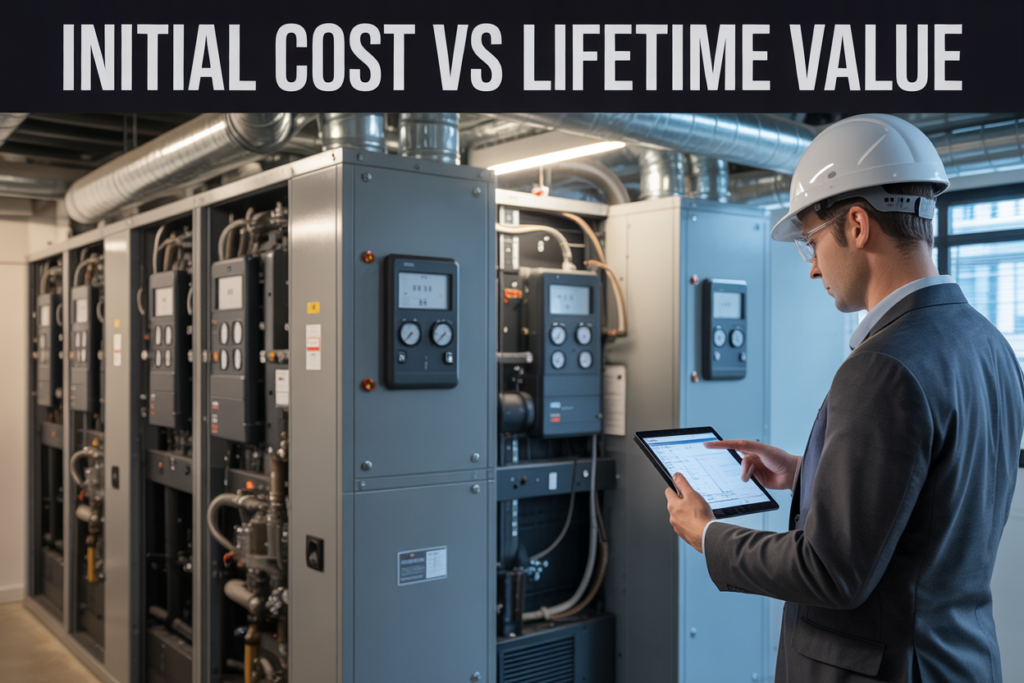
Hotel owners and hospitality developers often make a costly error during project planning: choosing MEP systems based on the lowest upfront price rather than long-term value. This short-sighted approach to hotel engineering planning can triple operational costs over a property’s lifetime.
Who this guide serves: Hotel owners, project developers, engineering consultants, and operations managers involved in hospitality project development and hotel pre-opening planning.
What we’ll cover: First, we’ll examine the hidden costs that cheap MEP systems create through higher maintenance, energy consumption, and frequent repairs. Then, we’ll explore the strategic approach to MEP design strategy that balances initial investment with operational excellence hospitality standards. Finally, we’ll provide a framework for hotel cost optimization that considers the full lifecycle of your mechanical, electrical, and plumbing systems.
Smart hotel operations management starts with understanding that the cheapest option today often becomes the most expensive choice tomorrow.
Understanding the True Cost of MEP Systems Beyond Initial Investment
Hidden operational expenses that accumulate over time
The true cost of MEP systems in hotel operations management extends far beyond the initial investment, encompassing substantial operational expenses that accumulate throughout the system’s lifecycle. These hidden costs include energy consumption, routine maintenance, emergency repairs, and system upgrades that can significantly impact hotel cost optimization strategies. Understanding these lifetime operational costs is crucial for hospitality project development and effective hotel engineering planning, as they often exceed the initial capital expenditure by multiple factors over the system’s operational lifespan.
Energy consumption patterns and their financial impact
Energy consumption represents the largest component of MEP operational costs, directly affecting hotel energy management strategies and long-term profitability. MEP systems with lower initial costs often consume significantly more energy, resulting in higher utility bills that compound over years of operation. This creates a substantial financial burden that impacts overall operational excellence hospitality goals and requires careful consideration during hotel pre-opening planning phases.
Maintenance and repair costs throughout system lifecycle
MEP systems require ongoing maintenance and periodic repairs that contribute significantly to lifetime operational costs. These expenses include preventive maintenance programs, component replacements, and unexpected repair costs that can disrupt hotel operations management. A comprehensive hotel maintenance strategy must account for these recurring expenses, as systems with lower initial investments often demand more frequent and costly maintenance interventions throughout their operational lifecycle.
Common Misconceptions That Drive Poor MEP Investment Decisions
Short-term Budget Constraints Overshadowing Long-term Savings
Hotel operations management teams frequently fall into the trap of prioritizing immediate cost savings during MEP design strategy phases, inadvertently creating substantial operational expenses over the system’s lifecycle. This expensive mistake of valuing initial cost over lifetime operational cost leads to compromised hotel energy management systems and inflated hotel maintenance strategy requirements, ultimately undermining hotel cost optimization efforts and operational excellence hospitality goals throughout the facility’s operational lifespan.
Procurement Processes Focused Solely on Lowest Bid Pricing
Traditional procurement frameworks in hospitality project development emphasize lowest upfront pricing without incorporating comprehensive lifecycle cost analysis, creating a fundamental disconnect between initial investment and long-term operational efficiency. This approach during hotel pre-opening planning phases often results in suboptimal MEP systems that generate excessive operational costs, contradicting sound hotel lifecycle planning principles and negatively impacting overall hotel engineering planning effectiveness.
Lack of Lifecycle Cost Analysis in Decision-making Frameworks
The absence of structured lifecycle cost evaluation methodologies represents a critical gap in hotel engineering planning processes, where decision-makers lack the analytical tools necessary to assess total cost of ownership. Without proper lifecycle cost analysis integration into hotel pre-opening planning frameworks, organizations consistently make the expensive mistake of valuing initial cost over lifetime operational cost, compromising long-term operational excellence hospitality objectives and sustainable hotel cost optimization strategies.
Financial Impact of Prioritizing Upfront Savings Over Operational Efficiency
Quantifying the cost difference between cheap and quality MEP systems
Hotel operations management teams often discover that prioritizing upfront savings creates the expensive mistake of valuing initial MEP cost over crucial lifetime operational expenses. This shortsighted approach to hotel engineering planning significantly impacts hospitality project development, where cheap systems require frequent repairs, consume excessive energy, and demand constant maintenance interventions. Quality MEP systems, while requiring higher initial investment, deliver superior operational excellence hospitality through reduced energy consumption and maintenance costs.
Real-world case studies demonstrating expensive operational outcomes
Hotels that chose budget MEP systems during pre-opening planning frequently experience operational cost increases exceeding 40% annually. These facilities struggle with hotel energy management inefficiencies, requiring extensive hotel maintenance strategy adjustments. The expensive mistake becomes evident when operational teams realize that initial savings pale compared to ongoing expenses from poor-performing equipment and systems requiring constant attention.
ROI calculations showing when higher initial investment pays off
Strategic hotel cost optimization through quality MEP design strategy typically achieves payback within 3-5 years through reduced operational expenses. Hotels implementing comprehensive hotel lifecycle planning demonstrate that higher initial MEP investments generate positive returns through decreased energy consumption, reduced maintenance requirements, and improved operational efficiency, proving that the expensive mistake of prioritizing upfront savings ultimately costs significantly more.
Key Factors That Increase Long-Term MEP Operational Costs
Energy Inefficiency Leading to Higher Utility Bills
Poor MEP design choices in hotel operations management create substantial long-term financial burdens through escalating energy costs. Hotels implementing substandard HVAC systems, inefficient lighting solutions, and outdated mechanical equipment typically experience 20-40% higher utility expenses annually. These inefficiencies compound over time, making hotel cost optimization increasingly challenging as operational budgets strain under excessive energy consumption that could have been prevented through strategic MEP design strategy during initial planning phases.
Frequent Breakdowns Requiring Emergency Repairs and Replacements
Inadequate hotel engineering planning often results in MEP systems prone to unexpected failures, creating costly emergency repair scenarios. Hotels with poorly specified equipment face frequent breakdowns that disrupt guest experiences while demanding immediate, expensive interventions. Emergency repairs typically cost 3-5 times more than scheduled maintenance, severely impacting hotel maintenance strategy budgets. These unplanned expenses accumulate rapidly, making the initially “cheaper” MEP systems significantly more expensive than quality alternatives would have been in comprehensive hotel lifecycle planning.
Poor System Integration Causing Performance Issues and Waste
Lack of proper system integration during hospitality project development creates operational inefficiencies that persist throughout the hotel’s lifespan. When MEP components fail to communicate effectively, hotels experience energy waste, comfort issues, and increased maintenance complexity. Poor integration affects hotel energy management capabilities, preventing automated optimization and requiring manual interventions that increase labor costs. This fragmented approach to hotel pre-opening planning ultimately undermines operational excellence hospitality goals while creating ongoing performance issues that compound operational expenses year after year.
Strategic Approach to MEP System Selection and Budgeting
Implementing total cost of ownership evaluation methods
Now that we have covered the financial pitfalls of prioritizing upfront savings, developing a comprehensive total cost of ownership (TCO) framework becomes essential for hotel operations management. This evaluation method requires analyzing initial capital expenditure alongside projected operational costs, maintenance expenses, energy consumption, and system lifespan. Hotels must incorporate energy management projections, maintenance strategy costs, and replacement timelines into their MEP design strategy. Effective hotel engineering planning demands sophisticated financial modeling that extends beyond traditional procurement approaches, ensuring operational excellence hospitality standards while optimizing long-term value.
Balancing initial capital expenditure with operational savings potential
With this in mind, successful hotel project development requires strategic allocation between upfront investment and future operational benefits. Hotels should establish clear metrics comparing higher-quality MEP systems’ initial costs against reduced energy consumption, lower maintenance requirements, and extended equipment lifecycles. This balance directly impacts hotel cost optimization efforts throughout the facility’s operational phase. Smart hotel pre-opening planning incorporates detailed energy management analysis, allowing operators to justify premium MEP investments through quantifiable operational savings that compound over the system’s lifecycle.
Creating procurement criteria that prioritize long-term value over initial price
Previously, many hospitality projects have suffered from procurement processes focused solely on lowest bid scenarios. Effective hotel lifecycle planning demands procurement criteria that weight operational efficiency, reliability ratings, maintenance requirements, and energy performance alongside initial pricing. Hotels should establish evaluation matrices that score vendors on total value proposition rather than upfront costs alone. This approach ensures MEP design strategy aligns with long-term operational excellence hospitality goals, creating sustainable competitive advantages through superior system performance and reduced operational expenses over time.
Conclusion
The financial consequences of prioritizing MEP initial costs over lifetime operational expenses can devastate building budgets and performance for decades. While the appeal of lower upfront investments is understandable, this short-sighted approach consistently leads to higher energy bills, increased maintenance costs, and premature system replacements that far exceed any initial savings. The true cost of MEP systems extends well beyond purchase price, encompassing operational efficiency, maintenance requirements, and long-term reliability that directly impact your bottom line.
Smart MEP investment decisions require a strategic shift toward lifecycle cost analysis and total cost of ownership evaluation. By understanding the factors that drive long-term operational expenses and implementing a comprehensive budgeting approach, building owners and facility managers can make informed choices that deliver superior financial and operational performance. The most expensive MEP mistake isn’t overspending initially—it’s underinvesting in quality systems that would have saved significantly more over their operational lifetime.