
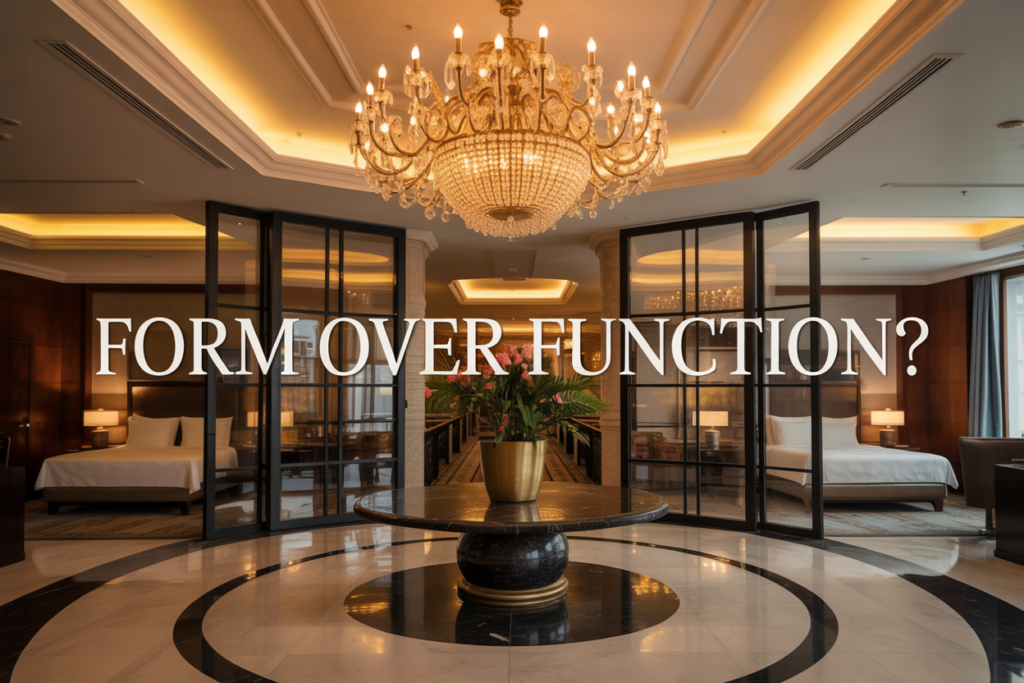
Many hotel developers and architects get caught up in creating stunning lobbies that leave guests speechless, but this focus often comes at a huge cost. Lobby Wow vs Operational Flow: A Costly Hotel Design Mistake happens when designers allocate prime square footage to impressive entrances while cramming guest rooms into awkward, inefficient layouts.
This costly trade-off affects hotel owners, property developers, and hospitality designers who want to maximize both guest satisfaction and operational profits. While a grand lobby might generate initial buzz, guests spend 90% of their time in rooms that feel cramped or poorly designed.
We’ll explore how The Hidden Operational Cost of Lobby-Centric Hotel Design impacts your bottom line through reduced room capacity and higher construction costs per rentable square foot. You’ll also discover practical strategies for creating memorable first impressions without sacrificing the functional spaces that actually generate revenue. Smart Hotel Planning Starts with Room Efficiency – and we’ll show you exactly how to achieve both visual impact and operational success.
Understanding the Costly Trade-Off Between Impressive Lobbies and Functional Spaces
Defining the “wow factor” mentality in commercial design
The “wow factor” mentality represents a design philosophy where impressive visual elements take precedence over practical functionality. This approach prioritizes creating stunning first impressions through grand lobbies, elaborate architectural features, and dramatic spatial arrangements that capture attention but often compromise operational efficiency and space utilization.
Hidden costs of prioritizing aesthetics over functionality
When lobby-centric hotel design dominates planning decisions, hidden operational costs emerge through inefficient staff workflows, increased maintenance expenses, and suboptimal space allocation. These aesthetic-first choices create ongoing financial burdens that extend far beyond initial construction costs, impacting daily operations and revenue generation potential.
Long-term impact on operational efficiency and user experience
The regrettable mistake of prioritizing lobby “wow factor” over efficient room layouts creates lasting consequences for both staff productivity and guest satisfaction. Poor space allocation decisions result in compromised service delivery, increased operational complexity, and diminished user experience as functional needs become secondary to visual impact, ultimately affecting the property’s long-term profitability and operational success.
Common Design Mistakes That Sacrifice Room Layout Efficiency
Oversized Lobby Spaces That Reduce Usable Floor Area
Hotels often allocate excessive square footage to lobby areas, creating dramatic first impressions at the expense of revenue-generating guest rooms. This lobby-centric hotel design approach sacrifices valuable floor space that could house additional rooms or larger, more comfortable accommodations. The hidden operational cost of lobby-centric hotel design becomes apparent when analyzing revenue per square foot, as oversized lobbies generate minimal income while consuming premium real estate that could otherwise contribute directly to the bottom line.
Impractical Traffic Flow Patterns Created by Dramatic Design Elements
Grand staircases, oversized art installations, and elaborate water features frequently disrupt natural circulation paths throughout hotel spaces. These dramatic elements force guests and staff to navigate circuitous routes, creating bottlenecks during peak hours and increasing operational inefficiencies. When efficient room layouts matter more than grand lobbies, designers must prioritize clear sightlines and intuitive wayfinding over purely aesthetic considerations that complicate daily operations.
Neglecting Storage and Utility Needs for Visual Appeal
The pursuit of visual impact often leads to inadequate back-of-house facilities, insufficient storage areas, and poorly positioned service corridors. Essential operational spaces get relegated to basement levels or awkward locations, forcing staff to travel greater distances and reducing service efficiency. Smart hotel planning starts with room efficiency by ensuring that utility areas receive proper allocation before dedicating excessive space to decorative elements that contribute little to guest satisfaction or operational effectiveness.
Financial Consequences of Poor Space Allocation Decisions
Now that we’ve examined the design mistakes that prioritize aesthetics over functionality, the financial impact of these decisions becomes startlingly clear across multiple operational areas.
Reduced Revenue Potential from Smaller Functional Areas
When hotels allocate excessive square footage to impressive lobbies, they directly sacrifice revenue-generating spaces. This lobby-centric hotel design approach reduces the number of bookable rooms, meeting spaces, and amenities that generate direct income. Each square foot dedicated to an oversized lobby represents lost revenue potential that compounds daily. Hotels with efficient room layouts consistently outperform properties that prioritize grand lobbies over functional space allocation, as operational flow directly correlates with profitability.
Increased Operational Costs Due to Inefficient Layouts
Poor space allocation decisions create ongoing operational inefficiencies that drain resources. Staff must navigate longer distances between functional areas, increasing labor costs and reducing service efficiency. The hidden operational cost of lobby-centric hotel design includes higher staffing requirements, increased energy consumption for heating and cooling vast open spaces, and reduced productivity due to awkward traffic patterns. These inefficiencies compound over time, creating a significant financial burden that impacts the bottom line.
Higher Maintenance Expenses for Elaborate Lobby Features
Impressive lobby features require substantial ongoing maintenance investments that strain operational budgets. High ceilings, elaborate lighting systems, expensive materials, and artistic installations demand specialized cleaning, regular repairs, and periodic replacements. These maintenance expenses often exceed initial budget projections and continue indefinitely throughout the property’s lifecycle. Smart hotel planning that starts with room efficiency helps avoid these costly maintenance commitments while delivering better long-term financial performance through practical design choices.
Strategies for Balancing Visual Impact with Practical Layout Design
Creating memorable first impressions without wasting square footage
Successful hotel design requires strategic allocation of space that maximizes both visual impact and operational efficiency. Smart planning starts with identifying high-traffic areas where impressive design elements deliver maximum exposure without compromising valuable square footage. Consider double-height ceilings in select zones rather than throughout entire lobbies, creating dramatic focal points while preserving usable space above for revenue-generating functions.
Integrating functional elements into aesthetically pleasing designs
Previously established design principles show that operational elements can enhance rather than detract from lobby aesthetics when thoughtfully integrated. Concierge stations, check-in counters, and seating areas should flow seamlessly into the overall design narrative while maintaining clear sightlines and efficient guest movement patterns. Multi-functional furniture pieces, such as reception desks that double as art installations or seating arrangements that define circulation paths, exemplify this balanced approach to lobby wow factor versus operational flow.
Prioritizing user workflow and accessibility in space planning
With this understanding of integrated design, successful space planning must prioritize guest and staff circulation patterns above purely aesthetic considerations. Efficient room layouts matter more than grand lobbies when evaluating long-term operational success. Strategic placement of elevators, clear wayfinding systems, and unobstructed pathways ensure that impressive design elements enhance rather than hinder daily operations, ultimately supporting both guest satisfaction and revenue optimization through improved operational efficiency.
Best Practices for Maximizing Both Form and Function
Conducting thorough needs assessments before design decisions
Now that we’ve covered the financial consequences of prioritizing visual impact over functionality, smart hotel planning starts with room efficiency through comprehensive needs assessments. Before committing to grand lobby designs, successful hoteliers analyze guest flow patterns, operational requirements, and space utilization metrics. This data-driven approach prevents the costly mistake of lobby-centric hotel design by identifying actual space needs versus perceived aesthetic requirements. Understanding why efficient room layouts matter more than grand lobbies begins with quantifying how guests and staff actually use different areas throughout the day.
Involving end users in the planning process
With this understanding established, involving both guests and staff in the design process reveals critical insights often overlooked by architects focused solely on visual appeal. Front desk personnel understand traffic bottlenecks, while housekeeping staff recognize the operational flow challenges created by impressive but impractical layouts. Guest feedback sessions during the planning phase highlight the disconnect between lobby wow factor and actual user experience, ensuring that operational efficiency remains central to design decisions.
Measuring success beyond initial visual impact
Previously established metrics must extend far beyond opening day photographs and design awards. Long-term success indicators include operational efficiency ratings, staff productivity measures, guest satisfaction scores related to functionality, and revenue per square foot comparisons. The hidden operational cost of lobby-centric hotel design becomes apparent when tracking maintenance expenses, energy consumption, and staff time allocation across different spaces. These comprehensive metrics reveal whether the initial visual impact translates into sustainable operational success.
Conclusion
The tension between creating visually stunning lobbies and maintaining efficient room layouts represents one of the most critical decisions in space design. As we’ve explored, the financial consequences of prioritizing wow factor over functionality can be severe, leading to wasted square footage, reduced operational efficiency, and ultimately, diminished user satisfaction. The most successful spaces are those that refuse to accept this as an either-or proposition.
Smart design strategies demonstrate that impressive visual impact and practical functionality can coexist harmoniously. By implementing thoughtful space allocation decisions, focusing on multipurpose design elements, and prioritizing user flow alongside aesthetic appeal, you can create environments that truly deliver on both fronts. The key lies in viewing your lobby not as a separate showpiece, but as an integral part of a cohesive, well-planned space that serves both your visual aspirations and your practical needs
.