
Why Operational Setup in Hotels Goes Way Beyond Just Hiring and Training
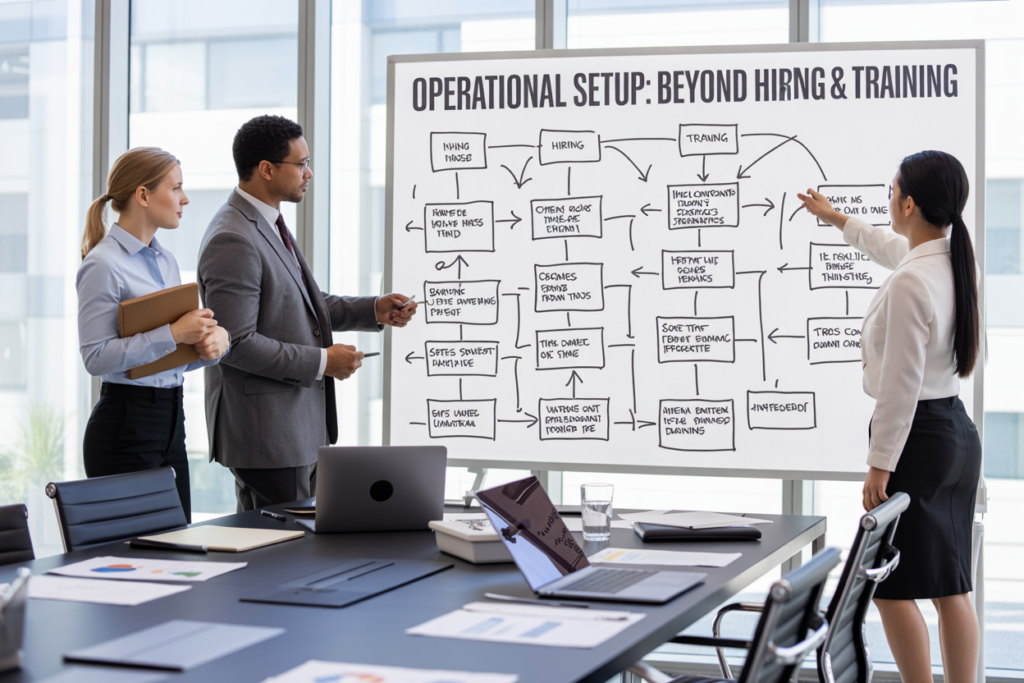
Most hotel owners and hospitality managers think operational setup means posting job ads and running training sessions. They’re wrong.
Operational setup is the backbone that determines whether your property thrives or struggles from day one. When you focus only on staffing vs operations, you miss the systems, processes, and strategic planning that separate successful hotels from those constantly fighting fires.
This guide is for hotel owners, general managers, and hospitality professionals who want to understand what real hotel operations setup actually involves. You’ll discover why so many properties fail despite having “trained staff” and learn how proper operational planning sets the foundation for long-term success.
We’ll explore the critical operational components that most people overlook during pre-opening operations, reveal the hidden costs that catch owners off guard when they skip proper hotel pre-opening strategy, and show you how to build systems that actually work. You’ll also learn how to measure whether your operational setup is truly ready for guests or just looks good on paper.
Stop thinking hiring equals operational readiness. Your property’s success depends on getting this right.
Understanding the True Scope of Operational Setup
Defining operational setup beyond basic staffing
Operational setup in hospitality extends far beyond simply hiring and training staff. While many hoteliers focus solely on recruiting the right people, true operational setup encompasses comprehensive system architecture, workflow optimization, and strategic resource deployment. Hotel operations setup requires meticulous attention to technology integration, standard operating procedures, and performance metrics that drive sustainable business outcomes.
Strategic planning and infrastructure requirements
Effective hospitality setup demands robust infrastructure planning that aligns with long-term business objectives. Pre-opening operations must account for physical space utilization, technology backbone requirements, and scalable systems architecture. Hotel pre-opening strategy involves detailed capacity assessments, equipment specifications, and operational workflow mapping that supports both current needs and future growth trajectories within the competitive hospitality landscape.
Systems integration and process design
Modern hotel consulting emphasizes seamless integration between property management systems, point-of-sale platforms, and guest service technologies. Operations management requires standardized processes that ensure consistency across all guest touchpoints. Hospitality consulting professionals recommend implementing interconnected systems that facilitate real-time data sharing, automated reporting, and streamlined communication protocols between departments to maximize operational efficiency and guest satisfaction.
Resource allocation and capacity planning
Strategic operational planning involves sophisticated resource allocation models that optimize labor costs while maintaining service quality standards. Staffing vs operations decisions require comprehensive analysis of demand patterns, seasonal fluctuations, and service level requirements. Effective capacity planning ensures adequate resources during peak periods while maintaining cost efficiency during slower seasons, creating sustainable operational frameworks that support long-term profitability.
Critical Components Often Overlooked in Operations
Now that we’ve established the broader scope of operational setup, let’s examine the critical components that businesses frequently underestimate. These foundational elements extend far beyond basic staffing considerations and form the backbone of successful hospitality operations.
Technology Infrastructure and Digital Systems
Robust technology infrastructure serves as the nervous system of modern hotel operations setup. Property management systems, point-of-sale platforms, and integrated booking engines must seamlessly communicate to ensure smooth guest experiences. Without proper digital foundations, even well-trained staff cannot deliver consistent service standards that today’s hospitality guests expect.
Standard Operating Procedures and Documentation
Comprehensive operational planning demands detailed documentation that transforms institutional knowledge into repeatable processes. Standard operating procedures eliminate guesswork, ensure consistency across shifts, and accelerate new employee onboarding. These documented frameworks become particularly crucial during pre-opening operations when establishing service standards and operational workflows from the ground up.
Quality Control and Compliance Frameworks
Effective operations management requires systematic quality control mechanisms that monitor service delivery, safety protocols, and regulatory compliance. These frameworks protect both guests and business interests while maintaining brand standards. Regular auditing processes and corrective action protocols ensure operational excellence remains consistent throughout all operational phases.
Vendor Relationships and Supply Chain Management
Strategic vendor partnerships and supply chain optimization often determine operational success more than internal staffing decisions alone. Reliable suppliers, negotiated contracts, and backup contingency plans prevent service disruptions that could damage guest satisfaction. Hospitality setup requires careful vendor vetting and relationship management to ensure seamless operations from day one of opening.
The Hidden Costs of Inadequate Operational Planning
Employee turnover from poor onboarding systems
Poor operational planning creates cascading effects throughout hospitality organizations. When hotels rush through pre-opening operations without establishing proper onboarding systems, employee turnover rates skyrocket as new hires struggle without adequate training frameworks. These productivity losses compound when inefficient processes bog down daily operations, forcing staff to work harder rather than smarter. Customer satisfaction inevitably suffers from operational gaps—inconsistent service delivery, delayed responses, and system failures that damage brand reputation. Most critically, inadequate operational setup creates long-term scalability challenges, preventing hotels from expanding successfully as foundational weaknesses multiply with growth, ultimately costing far more than comprehensive operational planning would have required initially.
Building Robust Operational Foundations
Systematic Approach to Workflow Design
Now that we’ve explored the hidden costs of inadequate operational planning, creating effective workflows requires mapping every process from guest arrival to departure. Successful hotel operations setup demands standardized procedures that eliminate bottlenecks while maintaining service quality. Design workflows that clearly define responsibilities, decision points, and escalation protocols to ensure seamless operational planning and consistent guest experiences across all departments.
Creating Scalable Training Programs
Previously established workflows must be supported by comprehensive training systems that grow with your operation. Effective hospitality setup involves developing modular training programs that can accommodate seasonal staff increases and new service offerings. Build training materials that address both technical skills and brand standards, ensuring consistency whether you’re onboarding five employees or fifty during peak pre-opening operations phases.
Establishing Performance Monitoring Systems
With workflows and training in place, implementing robust monitoring systems becomes crucial for operational success. Hotel consulting experts recommend establishing key performance indicators that track both efficiency metrics and guest satisfaction scores. Deploy real-time monitoring tools that provide actionable insights into staffing performance, service delivery times, and operational bottlenecks, enabling proactive adjustments to your hospitality setup before issues impact guest experience.
Developing Contingency and Risk Management Plans
Finally, comprehensive operations management requires preparing for unexpected scenarios that could disrupt service delivery. Develop detailed contingency plans covering staff shortages, equipment failures, emergency situations, and supply chain disruptions. Create risk assessment matrices that identify potential operational vulnerabilities and establish clear protocols for maintaining service standards during challenging circumstances, ensuring your hotel pre-opening strategy accounts for both predictable and unexpected operational challenges.
Measuring Operational Setup Success
Key Performance Indicators Beyond Hiring Metrics
Now that we have covered the foundational elements of operational setup, measuring success requires a comprehensive approach that extends far beyond traditional hiring metrics. While staffing numbers provide basic insights, true operational planning effectiveness demands tracking system integration rates, compliance adherence levels, and technology adoption speeds. In hospitality setup environments, these advanced KPIs reveal whether your pre-opening operations are creating sustainable frameworks rather than merely filling positions for immediate operational needs.
Employee Engagement and Retention Rates
Employee engagement serves as a critical barometer of operational setup quality, directly reflecting how well your hotel operations setup has integrated culture, processes, and support systems. High retention rates indicate that your hospitality consulting approach has successfully created an environment where staff feel equipped and valued. Tracking engagement through regular surveys and retention analytics helps identify whether your operational planning has addressed the deeper organizational needs that keep talented professionals committed to your establishment long-term.
Process Efficiency and Error Reduction
With this in mind, process efficiency metrics reveal the true effectiveness of your operations management framework. Measuring task completion times, error frequencies, and workflow bottlenecks provides concrete evidence of whether your hotel pre-opening strategy has established streamlined systems. These efficiency indicators demonstrate how well your operational setup has eliminated redundancies and created clear pathways for consistent service delivery across all departments and operational touchpoints.
Customer Experience and Satisfaction Scores
Customer satisfaction scores ultimately validate the success of your entire operational setup approach. Previously established systems, training protocols, and service standards directly impact guest experiences and satisfaction ratings. In hospitality setup scenarios, tracking Net Promoter Scores, complaint resolution times, and service quality metrics reveals whether your comprehensive operational planning has translated into measurable guest value and competitive advantage in the marketplace.
Conclusion
Operational setup extends far beyond the surface-level activities of hiring and training personnel. As we’ve explored, true operational excellence requires a comprehensive understanding of interconnected systems, careful attention to often-overlooked components, and strategic planning that accounts for hidden costs and long-term sustainability. The foundation you build today directly impacts your organization’s ability to scale, adapt, and thrive in an increasingly complex business environment.
The organizations that succeed are those that invest time and resources into building robust operational frameworks from the ground up. This means establishing clear measurement systems, implementing scalable processes, and creating resilient structures that can withstand growth pressures and market changes. Don’t let the myth of simple operational setup limit your potential—embrace the complexity and invest in getting it right the first time
.