
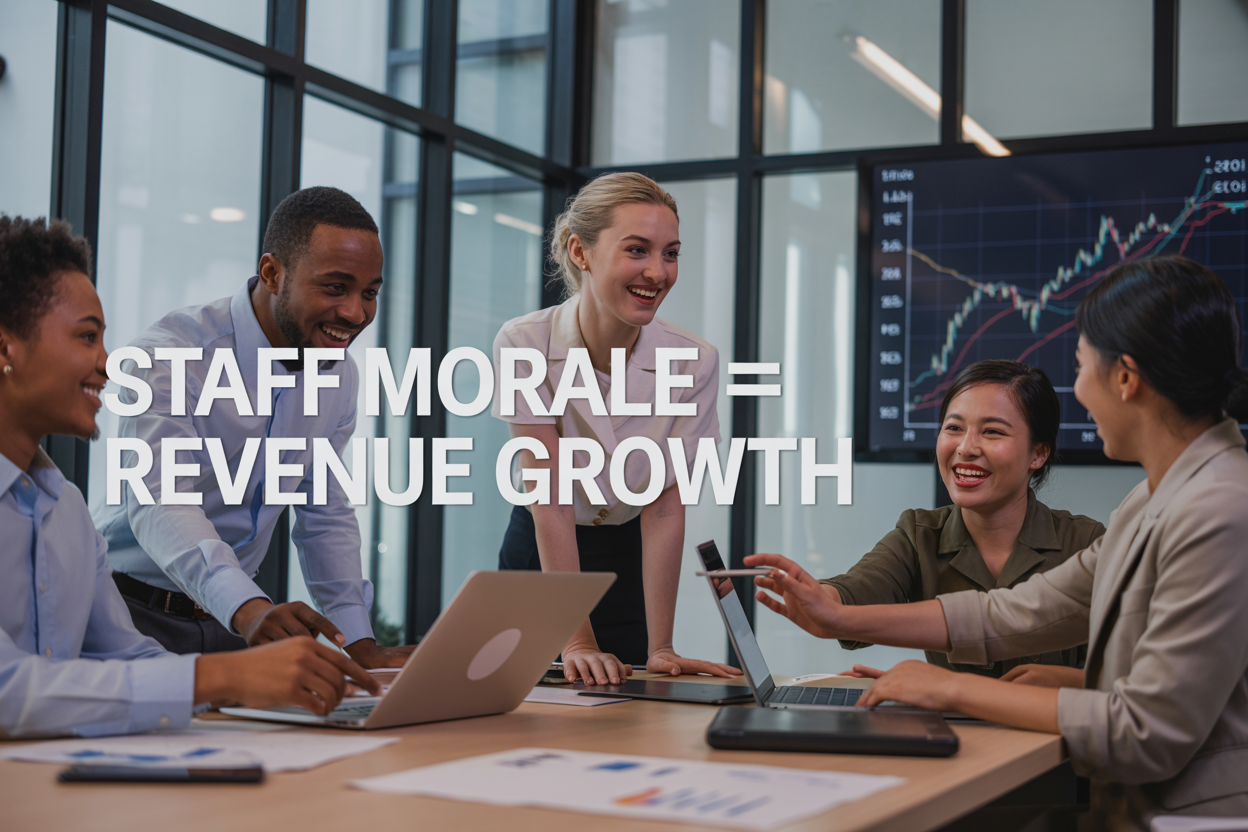
Why Your Hotel Staff’s Mood Could Be Your Secret Revenue Weapon
Hotel managers and hospitality leaders often chase revenue through complex pricing strategies and marketing campaigns. But the biggest profit driver might already be walking your halls every day—your team.
For hotel managers, general managers, and hospitality executives who want to boost their bottom line, understanding how staff morale impacts hotel revenue is game-changing. Happy employees don’t just show up to work. They create experiences that guests remember, share, and pay premium prices for.
When your front desk team genuinely smiles, housekeeping goes the extra mile, and your restaurant staff makes every meal special, something powerful happens. Guest satisfaction scores climb. Reviews improve. Repeat bookings increase. Revenue follows.
In this guide, we’ll break down how staff morale directly impacts revenue generation and reveal the hidden costs of low staff morale that drain profits from your property. You’ll also discover proven strategies to transform staff morale into profit that top-performing hotels use to outpace their competition.
Ready to unlock your team’s potential as your most valuable revenue management tool?
How Staff Morale Directly Impacts Revenue Generation
Employee Satisfaction Drives Customer Experience Quality
When hotel staff feel valued and engaged, they naturally deliver exceptional guest experiences that directly translate to increased revenue. Happy employees demonstrate genuine enthusiasm, provide personalized service, and go above and beyond to ensure guest satisfaction, leading to positive reviews, repeat bookings, and higher room rates through enhanced perceived value.
Motivated Teams Deliver Higher Productivity and Efficiency
Motivated hotel teams work more efficiently, reducing operational costs while maximizing revenue opportunities. Engaged employees proactively identify upselling opportunities, maintain higher standards of cleanliness and service, and collaborate effectively to minimize errors and waste, ultimately improving profit margins through optimized operations.
Positive Workplace Culture Reduces Costly Turnover and Training Expenses
A positive workplace culture significantly reduces the financial burden of constant recruitment and training cycles. When hotel staff morale remains high, employee retention increases dramatically, saving thousands in hiring costs while maintaining consistent service quality that guests recognize and value, directly protecting revenue streams.
The Hidden Costs of Low Staff Morale on Your Bottom Line
Decreased Service Quality Leads to Customer Loss
When hotel staff lack motivation and engagement, service quality inevitably suffers, creating a direct pathway to revenue loss. Disengaged employees deliver inconsistent experiences, resulting in negative guest reviews that damage your hotel’s reputation and reduce future bookings. This decline in hospitality service quality through poor employee engagement creates a costly cycle where dissatisfied guests choose competitors, directly impacting hotel profitability and long-term revenue growth.
Higher Absenteeism and Sick Days Increase Operational Costs
Low staff morale manifests in increased absenteeism, forcing hotels to rely on expensive temporary staffing solutions or overtime payments. These operational disruptions not only inflate labor costs but also compromise service consistency, as inexperienced temporary workers struggle to maintain your hotel’s standards. The financial burden of covering absent employees while maintaining quality service delivery significantly erodes profit margins.
Poor Employee Engagement Results in Missed Revenue Opportunities
Unmotivated hotel teams fail to capitalize on upselling and cross-selling opportunities that directly impact revenue generation. Engaged employees naturally recommend room upgrades, spa services, or dining experiences, while disengaged staff merely fulfill basic requests. This lack of proactive guest interaction means hotels miss substantial revenue opportunities that motivated, well-trained staff would easily capture through genuine hospitality and attentive service delivery.
Proven Strategies to Transform Staff Morale into Profit
Now that we’ve identified the hidden costs of poor staff morale, let’s explore actionable strategies that transform employee engagement into measurable revenue growth. These proven approaches directly impact hotel staff engagement and profitability while strengthening your hospitality workforce performance optimization.
Recognition and Reward Programs That Boost Performance
Implementing structured recognition systems creates immediate improvements in employee motivation strategies. Establish monthly performance awards, peer nomination programs, and spot bonuses for exceptional guest service moments. Track recognition frequency against guest satisfaction scores to demonstrate how employee satisfaction and hotel profitability correlate. Digital recognition platforms enable real-time acknowledgment, fostering continuous positive reinforcement that drives revenue-generating behaviors.
Professional Development Investments That Increase Employee Value
Strategic training investments yield compound returns through enhanced service delivery and reduced turnover costs. Offer cross-training opportunities, leadership development programs, and industry certifications that expand employee capabilities. When staff members develop new skills, they contribute more value while feeling personally invested in their roles. This dual benefit strengthens hotel service quality through employee engagement while creating internal talent pipelines.
Creating Clear Career Advancement Pathways for Long-term Retention
Transparent promotion structures eliminate uncertainty and motivate long-term commitment. Develop written career progression maps, mentorship programs, and skill-based advancement criteria. Regular career development conversations help employees visualize their future within your organization. This clarity reduces recruitment costs while building experienced teams who understand your service standards, ultimately improving hotel revenue through staff morale and creating sustainable competitive advantages in hospitality employee motivation strategies.
Measuring the ROI of Staff Morale Improvements
Key Performance Indicators That Connect Morale to Revenue
Establishing measurable KPIs proves essential for tracking how employee satisfaction influences hotel profitability directly. Revenue per available room (RevPAR) increases correlate strongly with higher employee engagement scores, while guest satisfaction ratings improve when hotel staff morale remains consistently elevated throughout service delivery periods.
Tracking Customer Satisfaction Metrics Alongside Employee Engagement
Guest review scores and employee satisfaction surveys reveal interconnected patterns that demonstrate how hospitality workforce performance optimization drives revenue growth. Hotels implementing regular pulse surveys alongside customer feedback tracking consistently identify opportunities where improved hotel staff engagement and profitability metrics align for maximum operational effectiveness.
Calculating Cost Savings from Reduced Turnover and Recruitment
Measuring turnover reduction benefits requires analyzing recruitment expenses, training investments, and productivity losses during staff transitions. Hotels investing in employee morale strategies typically reduce hiring costs by 40-60% while maintaining service quality standards that directly support improving hotel revenue through staff morale initiatives and sustainable workforce retention programs.
Building Sustainable Morale Management Systems
Regular Feedback Mechanisms and Performance Reviews
Establishing structured feedback systems creates the foundation for sustainable employee morale improvement. Regular one-on-one meetings, quarterly performance reviews, and real-time recognition programs ensure staff feel valued and understand their contribution to hotel revenue generation. These mechanisms enable managers to identify motivation challenges early, address concerns proactively, and maintain consistent hospitality employee motivation strategies that directly impact guest satisfaction and profitability.
Competitive Compensation Packages That Retain Top Talent
Strategic compensation structures prevent costly turnover while maintaining high-performing teams. Comprehensive packages including performance bonuses, health benefits, and professional development opportunities demonstrate investment in employee satisfaction and hotel profitability. When staff feel fairly compensated, their engagement levels increase dramatically, leading to enhanced service quality that guests notice and reward through positive reviews and repeat business.
Work-Life Balance Initiatives That Enhance Job Satisfaction
Implementing flexible scheduling, adequate time off, and wellness programs creates sustainable workforce performance optimization. These initiatives reduce burnout, improve employee morale, and foster positive hotel staff culture that guests experience firsthand. When employees maintain healthy work-life balance, their enthusiasm translates into exceptional guest experiences, ultimately improving hotel revenue through staff morale and creating long-term competitive advantages in the hospitality industry.
Conclusion
Your staff’s morale isn’t just a nice-to-have workplace perk—it’s your most underutilized revenue management tool. As we’ve explored, the direct connection between employee satisfaction and financial performance runs deeper than most organizations realize. Low morale creates hidden costs that silently drain your bottom line, while engaged, motivated teams become profit-generating powerhouses. The strategies we’ve discussed transform workplace culture from an expense center into a revenue driver, with measurable ROI that speaks directly to your financial goals.
The time to act is now. Building sustainable morale management systems requires commitment, but the financial returns make it one of the smartest investments you’ll ever make. Start measuring your current staff morale baseline, implement the proven strategies that align with your business goals, and watch as your team’s renewed energy translates directly into improved performance and increased revenue. Your bottom line will thank you, and so will your employees.