
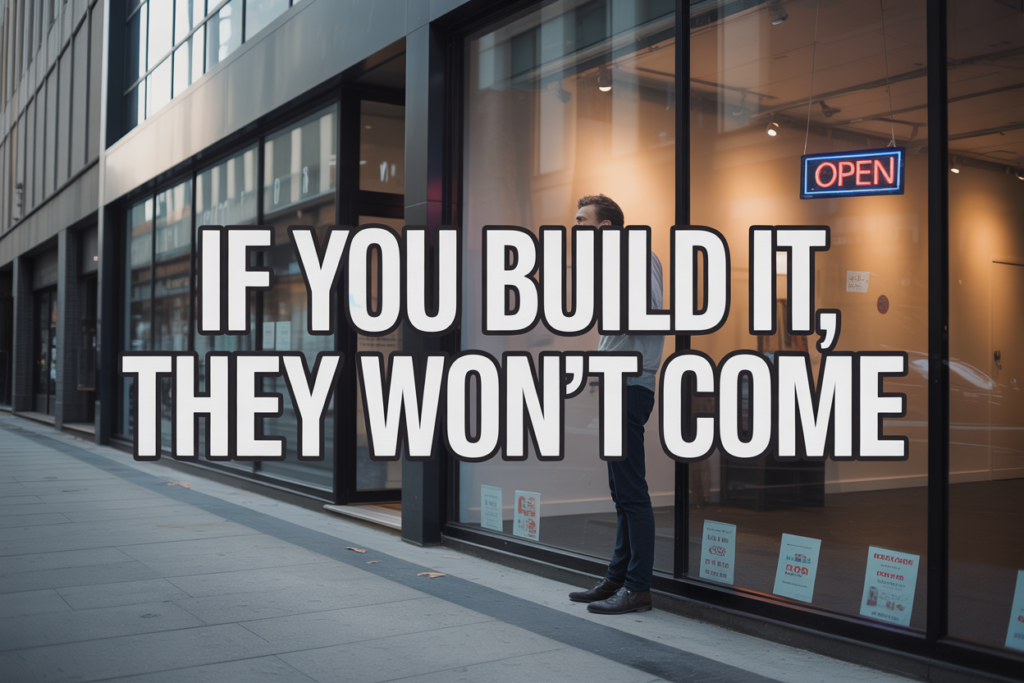
The “If You Build It, They Will Come” hotel feasibility myth has destroyed more hospitality dreams than any other assumption in the industry.
This deadly belief convinces developers that a beautiful property, prime location, and quality amenities automatically guarantee guests and profits. The reality? Countless hotels sit half-empty despite checking every box on paper.
This guide is for hotel developers, investors, and hospitality professionals who want to avoid the biggest hotel development mistake that leads to project failures and financial losses.
We’ll expose why this build-it mentality creates such devastating hotel project planning mistakes and explore the critical market research that most developers skip. You’ll discover the essential customer acquisition strategies that successful hotels build into their development process from day one, plus learn how to conduct proper hotel market demand analysis that actually predicts real-world performance.
Stop gambling with your hotel investment. The difference between thriving properties and costly failures isn’t luck – it’s understanding what really drives hotel project success.
Understanding the “Build It and They Will Come” Fallacy
Origins of the myth in popular culture and business thinking
The “build it and they will come” mentality stems from the 1989 film Field of Dreams, where a farmer builds a baseball field believing customers will magically appear. This romantic notion infiltrated business thinking, creating dangerous assumptions about automatic market demand. In hospitality, this translates to developers believing a beautiful hotel automatically guarantees guests, ignoring the critical reality that hotel market demand analysis requires extensive research, not wishful thinking about spontaneous customer arrival.
Why passive marketing strategies fail in competitive markets
Passive marketing represents one of the biggest hotel development mistakes in today’s saturated hospitality landscape. Simply opening doors and waiting for guests creates a recipe for failure, as competitors actively pursue the same target demographics. Modern travelers have countless accommodation options, making passive approaches ineffective. Without proactive customer acquisition strategies, even the most luxurious properties struggle to achieve sustainable occupancy rates, highlighting why hotels fail after opening despite significant initial investments.
The gap between product creation and customer acquisition
A fundamental disconnect exists between creating hospitality products and securing paying customers, representing a critical hotel project planning mistake. Developers often focus exclusively on construction, design, and amenities while neglecting customer acquisition infrastructure. This gap becomes apparent when beautiful, well-appointed hotels sit empty because ownership assumed guests would naturally discover and choose their property. Understanding hotel feasibility reality means recognizing that customer acquisition requires separate, dedicated strategies independent of product development efforts.
Real-World Consequences of Believing This Myth
Failed Startups That Relied Solely on Product Quality
Even the most exceptional hotel concepts with stunning design and premium amenities have failed when developers assumed quality alone would guarantee success. Without strategic market positioning and targeted marketing, these hotel project planning mistakes led to empty rooms despite significant investment in development and construction.
Wasted Resources on Development Without Marketing Plans
This biggest hotel development mistake occurs when investors pour millions into construction while neglecting market demand analysis. Hotel feasibility reality shows that properties without pre-opening marketing strategies often struggle to achieve projected occupancy rates, resulting in hospitality investment mistakes that could have been prevented with proper planning.
Missed Opportunities for Early Customer Feedback and Iteration
Why hotels fail after opening often traces back to developers who didn’t engage potential guests during the planning phase. Without early market validation, hotel projects miss critical insights about guest preferences, pricing expectations, and service requirements, leading to costly post-opening modifications and disappointing performance metrics.
Essential Elements Missing from the Build-It Mentality
Market research and customer validation before building
Now that we’ve examined the real-world consequences of the build-it mentality, let’s explore what’s fundamentally missing from this approach. The biggest hotel development mistake is launching without proper market demand analysis. Successful hotel projects begin with comprehensive feasibility studies that validate actual customer needs, not assumptions. This includes analyzing local competition, understanding target demographics, and confirming sufficient demand exists. Hotel market demand analysis prevents the common hospitality investment mistakes that lead to failed projects. Smart developers conduct extensive customer interviews, survey potential guests, and test their concept before committing significant resources. This validation process reveals whether your hotel concept addresses genuine market gaps or merely represents wishful thinking.
Strategic marketing and promotion from day one
Previously, I’ve seen countless hotel projects fail because owners believed quality alone would drive bookings. Hotel project success strategy requires integrating marketing efforts from the planning phase, not after opening. This means building brand awareness, establishing online presence, and creating anticipation months before launch. Effective hotel project planning includes dedicated marketing budgets, social media strategies, and partnerships with travel platforms. The reality is that even exceptional hotels struggle without proper promotion. Marketing should be viewed as essential infrastructure, not an afterthought, to avoid why hotels fail after opening scenarios.
Building relationships and community around your product
With this in mind, the most overlooked element in hotel feasibility reality is community building. Successful hospitality projects create emotional connections with future guests before doors open. This involves engaging with local communities, building relationships with travel influencers, and fostering loyalty among early supporters. Hotels that thrive understand that relationships drive repeat business and word-of-mouth referrals. Community building includes partnering with local businesses, participating in tourism boards, and creating meaningful experiences that guests want to share. These relationships become invaluable assets that differentiate your property in competitive markets.
Proven Strategies to Attract Your Target Audience
Creating compelling value propositions that resonate
Previously, we’ve discussed the dangerous assumption that simply building a hotel guarantees success. Now that we understand this fallacy, let’s explore proven strategies to attract your target audience. Creating compelling value propositions requires understanding what drives your potential guests’ decisions. Your hotel’s unique selling points must address specific pain points in your market segment. Whether it’s location convenience, luxury amenities, or budget-friendly options, your value proposition should clearly communicate why guests should choose your property over competitors.
Leveraging content marketing to build awareness
Content marketing serves as a powerful tool for hotel feasibility success strategy by establishing your property’s presence before opening. Develop engaging content that showcases your hotel’s unique features, local attractions, and guest experiences. This approach helps avoid the biggest hotel development mistake of launching without established market awareness. Blog posts, virtual tours, and behind-the-scenes content create anticipation and build trust with potential guests. Effective content marketing addresses common hospitality investment mistakes by generating organic interest and search visibility.
Utilizing social media and digital channels effectively
With this in mind, digital channels become essential for modern hotel project success strategy. Social media platforms allow direct engagement with your target audience, sharing visual content that highlights your property’s appeal. Implement targeted advertising campaigns based on thorough hotel market demand analysis rather than hoping guests will discover you organically. Email marketing, partnerships with travel influencers, and online travel agency optimization ensure your hotel reaches potential guests through multiple touchpoints, preventing the common scenario of why hotels fail after opening due to insufficient marketing efforts.
Building Customer Acquisition into Your Development Process
Incorporating User Feedback Loops Throughout Development
Successful hotel projects require continuous market validation during development phases. Implementing structured feedback mechanisms early helps identify potential hotel project planning mistakes before significant capital investment. Regular stakeholder consultations, community surveys, and competitor analysis prevent costly oversights that lead to why hotels fail after opening.
Creating Minimum Viable Products for Early Market Testing
Hotel feasibility myths often stem from skipping prototype phases. Developing scaled-down concepts—such as pop-up hospitality experiences or limited service offerings—allows testing market demand before full construction. This approach validates assumptions about guest preferences and prevents the biggest hotel development mistake of building without proven demand.
Developing Launch Strategies Before Product Completion
Pre-opening marketing strategies must align with hotel market demand analysis findings. Smart developers begin customer acquisition efforts during construction phases, building anticipation and securing bookings before doors open. This hotel project success strategy includes establishing distribution partnerships, creating brand awareness campaigns, and developing pricing models based on validated market research rather than assumptions.
Measuring Success Beyond Just Building
Key performance indicators for customer attraction
Now that we’ve covered essential strategies for building customer acquisition into your development process, measuring the right metrics becomes critical for hotel project success. Track occupancy rates, average daily rate (ADR), and revenue per available room (RevPAR) as primary indicators. Monitor booking conversion rates from your website and marketing channels to identify which customer attraction methods deliver actual results rather than just traffic.
Tracking engagement and conversion metrics
Previously, I’ve emphasized how hotel market demand analysis requires ongoing measurement beyond initial feasibility studies. Focus on metrics like website engagement time, social media interaction rates, and email campaign performance. These hospitality investment mistakes can be avoided by tracking guest inquiry-to-booking ratios, repeat visitor percentages, and customer acquisition costs across different marketing channels to understand what truly drives hotel project success.
Adjusting strategies based on real customer behavior data
With this in mind, successful hotel development requires continuous strategy refinement based on actual guest behavior patterns. Analyze seasonal booking trends, guest demographics, and preferred amenities to adjust your marketing approach. This hotel project planning approach prevents the biggest hotel development mistake of assuming initial strategies will remain effective, ensuring your hotel feasibility reality aligns with evolving market demands.
Conclusion
The belief that simply building a great product guarantees success has led countless entrepreneurs and businesses down a costly path of failure. Understanding the real-world consequences of this myth, recognizing the essential elements missing from the build-it mentality, and implementing proven audience attraction strategies are critical steps toward sustainable business success. Customer acquisition must be woven into your development process from day one, not treated as an afterthought.
Success extends far beyond the act of building—it requires deliberate marketing efforts, understanding your target audience, and measuring the right metrics to track genuine progress. Don’t let your brilliant idea become another cautionary tale. Start planning how you’ll reach and engage your customers today, because in the real world of business, building it is just the beginning of your journey to success.