
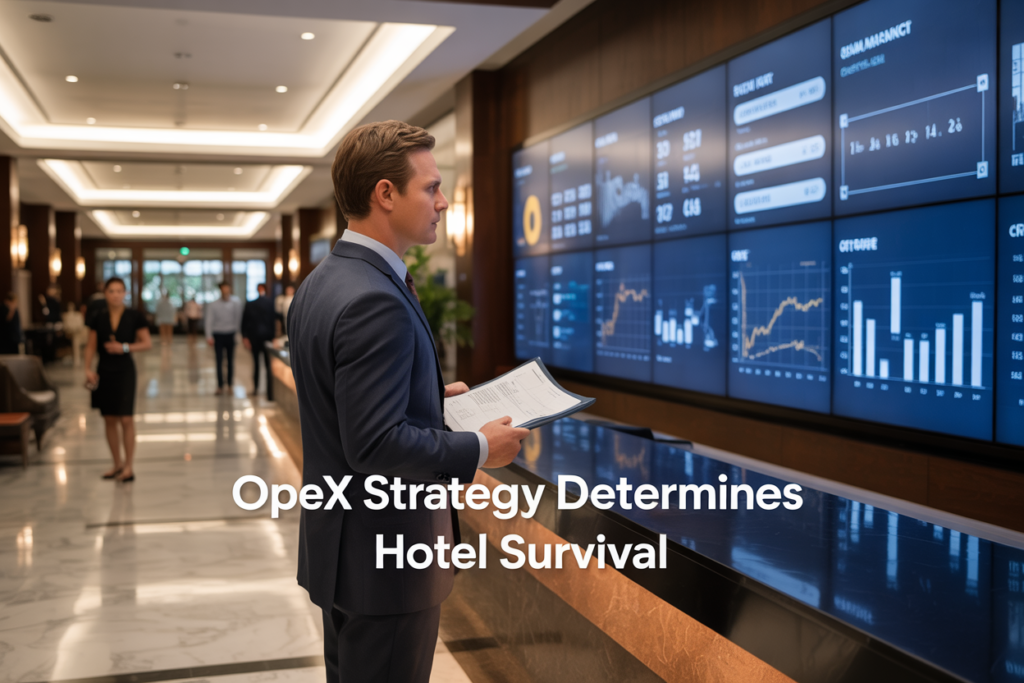
Hotels don’t tank because of lousy locations or rotten luck—they crash and burn because of sloppy operational expense management. You’re probably sitting there thinking this sounds like your property, and honestly? You might be right.
Smart hotel operations separate winners from losers barely keeping the lights on. Your operational expenses hit guest happiness, staff loyalty, and profit margins like dominoes. Get OPEX right, and you’ve built yourself a money-making machine that laughs at economic storms.
Here’s the deal: this guide shows how OPEX fundamentals can flip your hotel’s financial game upside down. We’ll dig into why strategic cost control pumps up revenue without turning your property into a budget nightmare. Plus, you’ll discover how smart tech investments act like insurance policies during rough patches.
Understanding OPEX and Its Critical Role in Hotel Operations
Defining operational expenditure versus capital expenditure in hospitality
Knowing the difference between OPEX and CAPEX is like learning to walk before you run. Operational expenditures cover your daily bread-and-butter costs—staff paychecks, electric bills, fixing broken stuff, marketing pushes, and supplies that keep doors open.
CAPEX involves those big-ticket, one-and-done purchases like renovating lobbies or buying new equipment. OPEX? That’s the recurring stuff that makes or breaks your monthly P&L statement.
Key OPEX categories that impact hotel profitability
Labor costs eat up 30-40% of your expenses right off the bat. Then you’ve got utilities keeping guests comfortable, maintenance preventing disasters, marketing bringing bodies through doors, food and beverage costs, and admin expenses.
Each category needs watching like a hawk. Labor optimization and energy efficiency? Those are your biggest levers for controlling costs without sacrificing quality.
How OPEX directly affects guest satisfaction and retention
Here’s something most hotel managers miss: strategic OPEX spending directly shapes guest experiences. Skimp on staff training, housekeeping supplies, or facility upkeep, and watch your reviews tank faster than a lead balloon.
Smart managers balance cost control with guest happiness. Under-invest in operations, and you’re basically setting money on fire through lost repeat business and damaged reputation.
Revenue Management Through Strategic OPEX Control
Optimizing Staff Scheduling to Match Demand Patterns
You know that feeling when you’re overstaffed on a Tuesday night in February? Data-driven scheduling systems fix that headache by matching workforce deployment with actual occupancy patterns.
Smart scheduling prevents overstaffing costs while keeping service levels high during busy periods. It’s like having a crystal ball, except it actually works.
Managing Utility Costs Without Compromising Guest Comfort
Guests want their rooms comfortable, not arctic or tropical. Intelligent climate controls, LED lighting, and water conservation measures slash utility bills without turning your property into an endurance test.
These systems work behind the scenes. Guests stay happy, and your utility bills don’t make you cry every month.
Balancing Maintenance Expenses with Property Standards
Preventive maintenance is like going to the dentist—nobody wants to do it, but it beats emergency root canals. Schedule routine maintenance during slow periods and invest in quality repairs that last.
This approach keeps your property looking sharp while controlling costs. Emergency repairs cost three times more than planned maintenance, and they always happen at the worst possible moments.
Technology Investment as Smart OPEX Strategy
Implementing automation to reduce long-term operational costs
Automation might seem expensive upfront, but it’s like buying a money-printing machine. Automated systems cut labor costs, boost efficiency, and create guest experiences that drive repeat bookings.
Think of technology investments as hiring employees who never call in sick, never need raises, and work 24/7 without complaining.
Leveraging data analytics for predictive maintenance and efficiency
Data analytics platforms spot equipment problems before they become expensive disasters. They also identify patterns in energy use, occupancy trends, and operational bottlenecks you never knew existed.
It’s like having a fortune teller for your hotel operations, except the predictions actually come true and save you money.
Choosing scalable solutions that grow with hotel demand
Scalable technology adapts to your hotel’s changing needs without breaking the bank. When demand drops, your tech costs don’t stay sky-high. When business booms, your systems grow with you.
This flexibility keeps technology investments profitable across varying occupancy levels while supporting sustainable growth.
Competitive Positioning Through Efficient Operations
Maintaining service quality while controlling costs
Here’s the million-dollar question: how do you deliver exceptional guest experiences without spending like a drunken sailor? The answer lies in eliminating waste, not cutting corners on service.
Smart cost control focuses on optimizing staff schedules, implementing energy-efficient practices, and streamlining processes. You’re looking for efficiency gains, not service cuts.
Creating operational flexibility to adapt to market changes
Successful hotels build operational frameworks that bend without breaking. This means developing scalable staffing models, cross-training programs, and flexible vendor partnerships.
When market conditions shift—and they will—you can quickly adjust service levels and expenses without panicking or making desperate decisions.
Building sustainable cost structures for long-term viability
Your cost structure needs to work during both feast and famine periods. Establish baseline operational costs, implement performance metrics, and continuously evaluate process efficiency.
This foundation keeps you competitive while maintaining financial sustainability, even when the market gets weird.
Crisis-Proofing Hotels with Adaptive OPEX Management
Developing contingency plans for revenue fluctuations
Crisis-proofing starts with scenario planning that doesn’t sugarcoat reality. Develop models for occupancy drops of 25%, 50%, and 75%. Yeah, those numbers hurt to think about, but preparation beats panic.
Each scenario should outline specific cost reduction measures, staffing adjustments, and service modifications. When crisis hits—and it will—you’ll have a playbook instead of chaos.
Identifying which operational expenses can be scaled quickly
Not all expenses are created equal when it comes to scaling. Variable costs like housekeeping supplies and temporary staffing can be cut immediately. Semi-variable expenses like marketing budgets offer medium-term flexibility.
Fixed costs including core staff salaries and insurance require longer-term strategic planning. Know which levers you can pull quickly and which need more time.
Maintaining essential services during economic downturns
Even during budget crunches, certain services must remain rock-solid. Front desk operations, security, and basic housekeeping directly impact guest satisfaction and can’t be compromised.
Creative solutions include cross-training staff for multiple roles, implementing energy-saving measures that don’t affect comfort, and leveraging technology to maintain service quality while reducing labor costs. The goal is maintaining guest experience while controlling expenses.
Conclusion
Hotel survival boils down to one thing: operational expenditure strategy. We’ve covered how strategic cost control impacts revenue optimization, competitive positioning, and crisis resilience. From technology investments to adaptive operational frameworks, hotels that master OPEX create advantages that go way beyond simple cost cutting.
The path forward is crystal clear for hoteliers ready to transform their operations. Smart OPEX management isn’t about slashing costs blindly—it’s about making strategic investments that enhance guest experiences while optimizing efficiency.
Hotels that embrace comprehensive OPEX strategy don’t just survive market challenges—they thrive when competitors struggle. The question isn’t whether you can afford to implement strategic OPEX management. It’s whether you can afford not to
.